
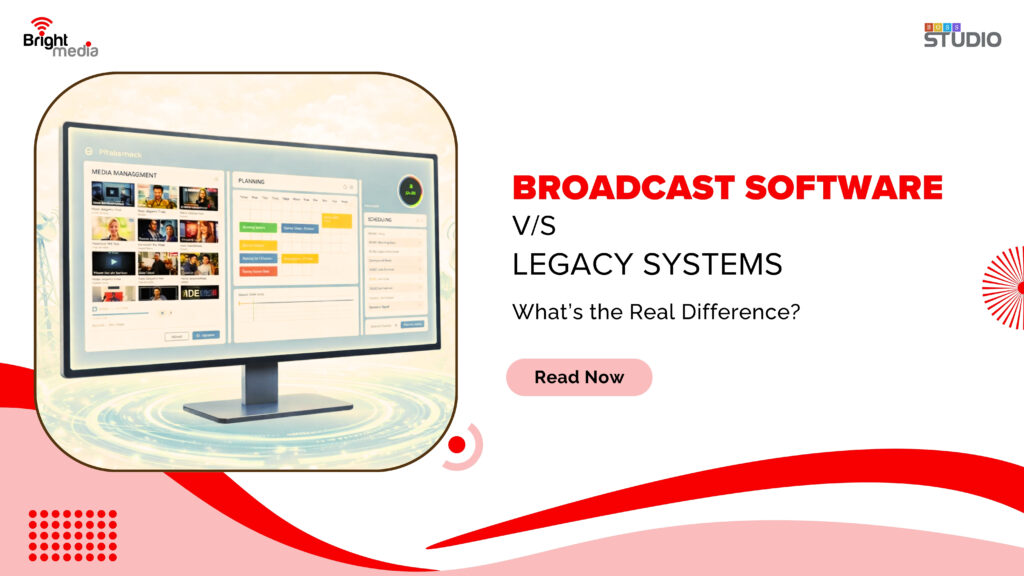
Broadcast Software vs. Legacy Systems: What’s the Real Difference?
The transition to Broadcast Software is a key piece of modern media operations but for many broadcasters, who are moving away from legacy systems, the question looms large: what is different after making the switch?
If you have spent even a small amount of time around an on-air broadcast environment, you’ve heard this conversation before. Someone suggests upgrading existing systems. Others argue that the existing system still functions — at least some of the time. Underlying the debate is one of those almost intractable questions that many organizations are loathe to answer outright: Is it really worth replacing legacy infrastructure?
It isn’t the most obvious answer right away.
Older systems usually have decades worth of running history behind them. Workflows developed and were modified done over the years. Temporary fixes become permanent processes. Habits replace efficiency. In many cases teams are following procedures no one remembers writing — just because that’s how it’s always been done. As such, migrating to modern broadcast software can seem less an exercise in embracing fresh tech than one in reinventing how work gets done.
Yet the differences are significant. Others are more subtle enhancing day to day mechanics. Some that are only realized through direct experience, and therefore not easy to miss.
Also Read: How TV Broadcast Automation Transforms the Way You Schedule, Stream, and Manage Content
Legacy Systems Were Built for Stability Above All
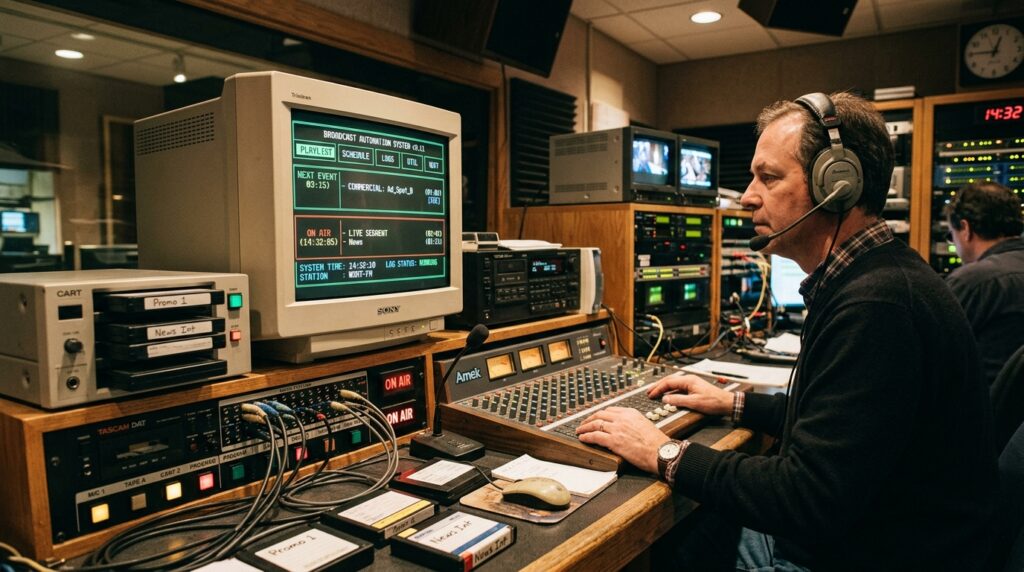
There’s a reason legacy broadcast systems lasted as long as they did. They were designed for reliability in a very specific environment. Fixed schedules. Predictable workflows. Limited distribution channels.
In many cases, they did their job well.
But broadcasting itself changed. Channels expanded. Platforms multiplied. Teams became distributed. Suddenly, systems built for stability began to feel rigid. Not broken exactly. Just less responsive.
Modern Tv Broadcast Software tends to prioritize flexibility alongside reliability. It assumes change will happen. And it’s designed to absorb that change without requiring constant manual adjustments.
That shift alone alters how teams work day to day.
Broadcast Software Environments Now Expect Constant Movement
One thing that stands out when comparing legacy setups with modern software broadcast environments is how they handle movement.
Schedules shift more often now. Content gets updated closer to air time. Ad inventory adjusts dynamically. Teams collaborate across locations.
Legacy systems often treat these changes as exceptions. Modern systems treat them as normal.
Also Read: Streamline Your Channel Like A Pro: The Power of a Broadcast Dashboard
Visibility Feels Different With Broadcast Software
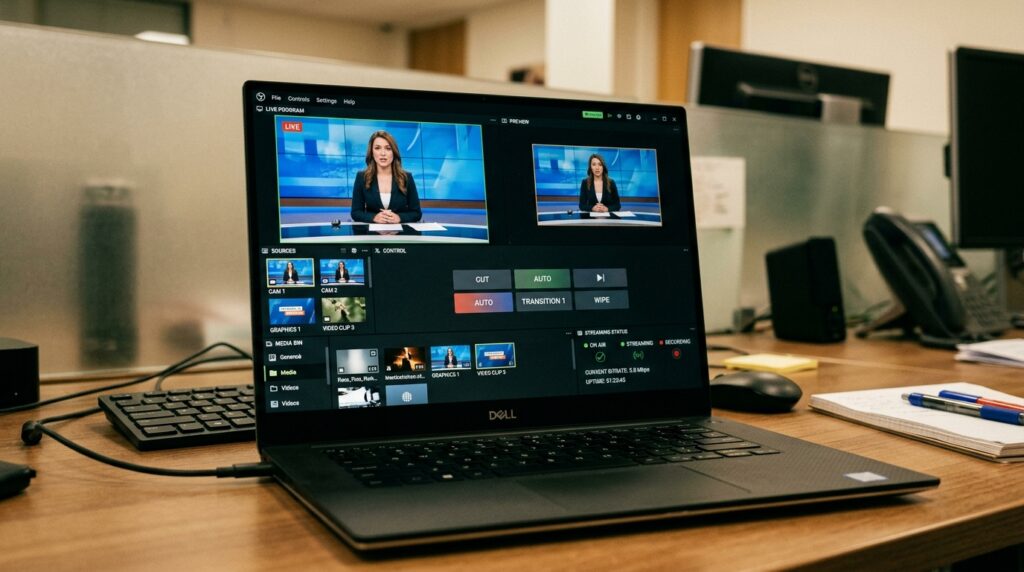
Modern Tv Broadcasting Software tends to make status visible. What’s scheduled. What’s pending. What’s changed. It’s all easier to see without digging.
This doesn’t just improve efficiency. It changes decision making. When teams see the same information, conversations become clearer. Fewer assumptions. Fewer surprises.
That clarity can feel almost quiet, but it’s powerful.
Integration Is No Longer Optional
Legacy environments often rely on separate systems stitched together over time. Scheduling lives in one place. Traffic somewhere else. Reporting somewhere else entirely.
It works. Until it doesn’t.
Modern Software Broadcast platforms lean toward integration. Data flows across functions more naturally. Updates propagate without manual syncing. Teams don’t need to reconcile versions constantly.
Integration reduces the invisible workload that accumulates in complex environments. And that workload tends to grow faster than anyone expects.
Also Read: Top Features to Look for in a Broadcast Scheduling System
Cloud and Remote Access Shift Expectations
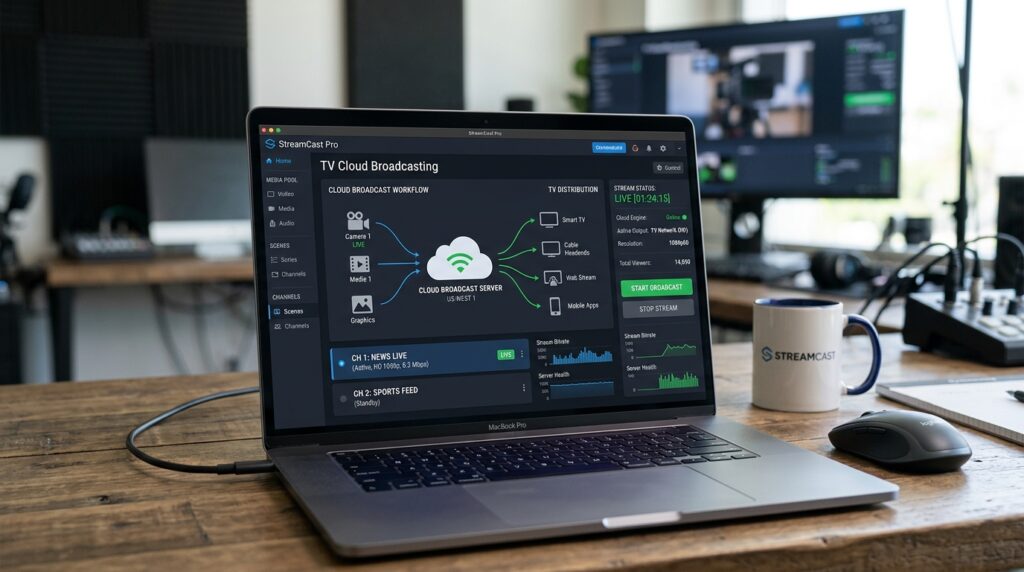
Legacy systems were built around physical infrastructure. Specific machines. Specific locations. Access sometimes required being in the building.
Today, expectations are different.
Modern Broadcasting Software often supports remote access, cloud workflows, and distributed teams. Engineers can check systems without traveling. Traffic & Scheduling teams can review schedules from anywhere.
This flexibility doesn’t just improve convenience. It changes how organizations operate, especially during unexpected situations.
Operational Stress Levels Tell an Honest Story
One way to compare legacy and modern systems is to observe stress during busy periods.
Under pressure, legacy setups sometimes reveal their limits. Manual processes increase. Communication intensifies. Small delays cascade.
Modern software broadcast environments don’t eliminate pressure, of course. But they tend to distribute it more evenly. Automation handles routine adjustments. Visibility reduces uncertainty.
The difference isn’t dramatic. It’s gradual. But noticeable.
Also Read: The Role of Cloud Technology in Broadcast Scheduling
The Real Difference Isn’t Just Technical
Perhaps the most interesting difference isn’t technical at all. It’s cultural.
Legacy environments often encourage caution. Modern Tv Broadcasting Software encourages adaptability.
The shift happens gradually. Teams become more comfortable responding to new requirements. Workflows evolve. Expectations adjust.
Conclusion
Comparing legacy systems against modern broadcast software is not simply a features or performance benchmarks game. It is about the way systems shape the cadence of a workday.
It makes flexible workflows look good by helping to speed the day-to-day ballpark, at-home and several potent ways of communicating while interlinked software portfolio which is working hand-in-hand with modern Tv Broadcast Software.
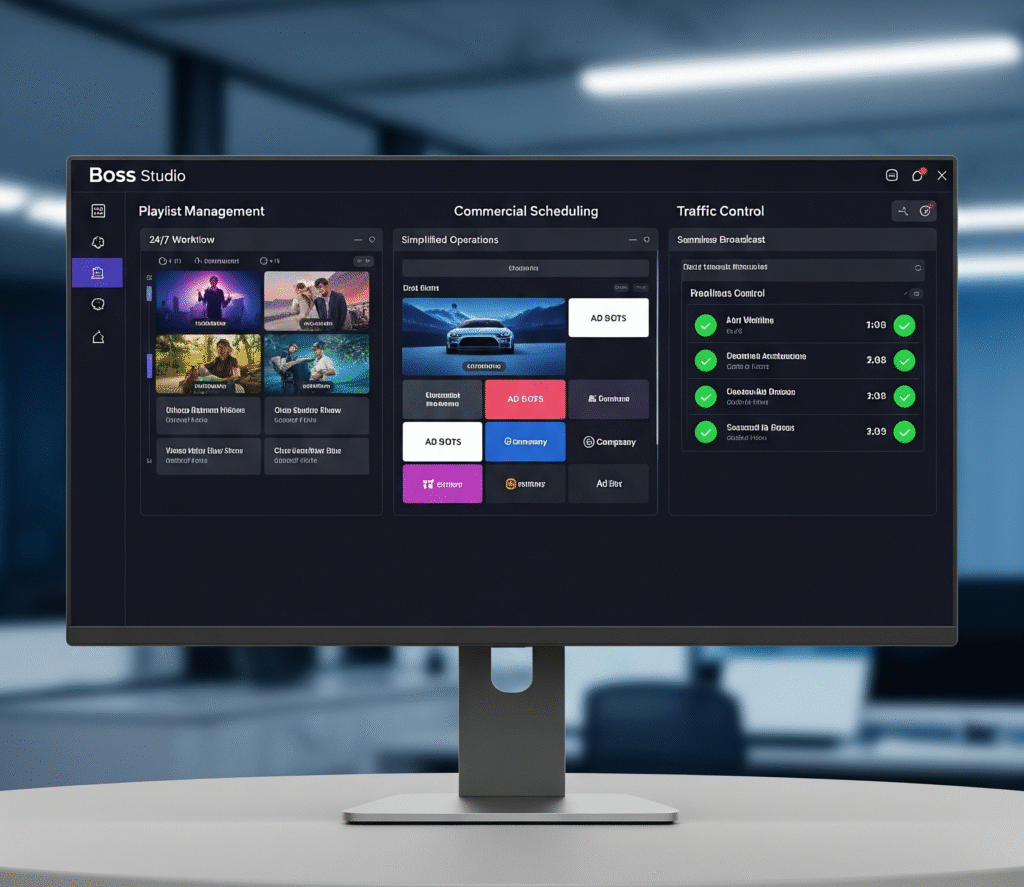
And its where BOSS Studio flows organically in. BOSS Studio is a contemporary broadcast automation and management platform intended as a replacement for the restrictive legacy workflows, creating flexible operations scaled to meet your needs. With BOSS Studio, broadcasters can make the transition seamlessly while keeping their reliability in real-time visibility, overall integrated scheduling and adaptive processes.
Also Read: How Cloud Broadcasting Enhances Efficiency and Flexibility for TV Channels
FAQ’s
1. Why broadcast software is better than legacy systems?
Legacy broadcast software from years gone by was primarily geared to stability and fixed workflows, whereas modern broadcast software offer adaptability, integration across multiple tools, and near real-time visibility.
2. So why are broadcasters still using legacy systems?
Legacy systems are well understood, provide a good performance and fit seamlessly with established workflows; migrating from legacy infrastructures is thus not an easy decision.
3. How does Tv Broadcasting Software enhance operations?
It automates and integrates, thus streamlining scheduling, enhancing collaboration, and minimizing manual processes.
4. Is migrating from a legacy system to a broadcasting software risky?
Migration is a planned process, but with modern tools and phased approaches, you can limit risk substantially.
5. What is a role of BOSS Studio in modernization?
BOSS Studio enables flexible automation, centralized control, and scalable broadcast workflows to help the broadcasters execute the transition from legacy environments.