
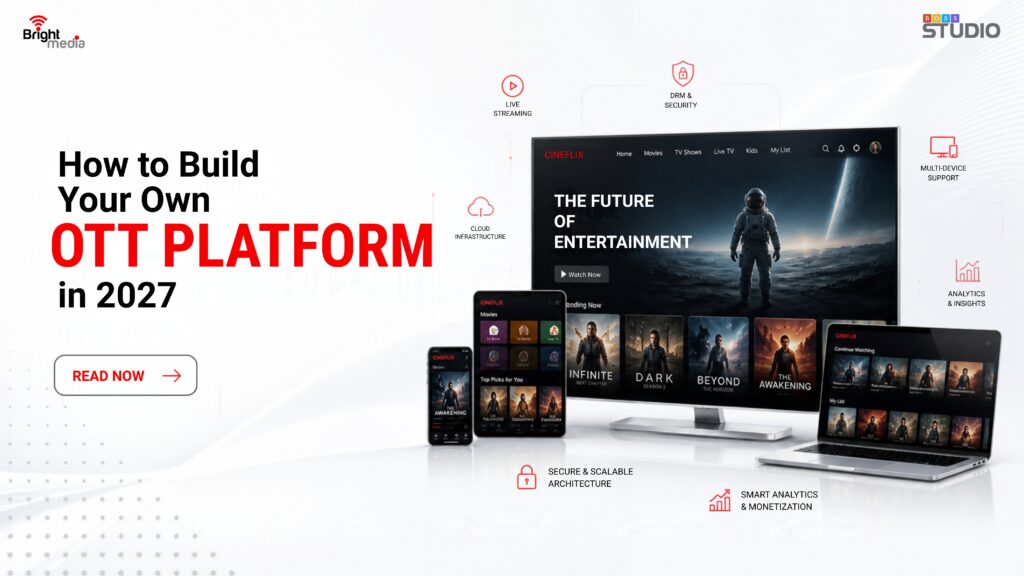
How to Build Your Own OTT Platform in 2027
Building an OTT platform in 2027 means you need a solid content plan, streaming tech that won’t let you down, apps people actually like to use, and a way to make money. If you’re a broadcaster, media company, or just someone sitting on a pile of content, you can create your own streaming service. The trick is picking the right technology like BOSS Studio, managing your content efficiently, and setting up workflows that don’t fall apart when things scale up.
Also Read: The Business of Streaming: How OTT Software Maximizes Revenue
What Exactly Is An OTT Platform?
It’s a streaming platform that delivers video straight to viewers online—no cable, no satellite boxes. Audiences get their movies, shows, live events, and whatever else you’re offering through their browsers, phones, or smart TVs. You can charge subscriptions, run ads, or let people pay per view. It’s flexible.
Key Takeaways:
- Define your audience, your content, and your business model.
- Choose streaming tech that is scalable, and user-friendly applications.
- Make sure your content gets delivered securely, track what’s working, and manage your catalogue well.
- Automate distribution wherever you can, so streaming to more platforms won’t turn into a nightmare.
Also Read: Key Features of a Modern OTT CMS
Ready To Build Your OTT Platform In 2027?
The first step is to identify your target audience and what format you’re offering—whether it’s Video-on-Demand, Live Streaming, or a mix. Know what your audience wants. They all have different needs, so get clear on what your viewers actually want.
Next, figure out your technology setup. You will need cloud hosting, app development for web, mobile, and smart TVs, payments, security, and a fast CDN. Build apps for web, mobile, and smart TVs so nobody gets left out.
Picking your tech stack is a big deal. Make sure it handles growth, keeps your content safe, and doesn’t buckle under pressure. Cloud-based systems, adaptive bitrate streaming, solid authentication, analytics, and smooth payment options all matter. Don’t spend on infrastructure you don’t need, but plan for your audience to grow. Test everything on different devices and connections—you’ll catch problems before your users do.
Also Read: How to Choose the Right OTT CMS for Your Platform
What Features Does An OTT Platform Really Need?
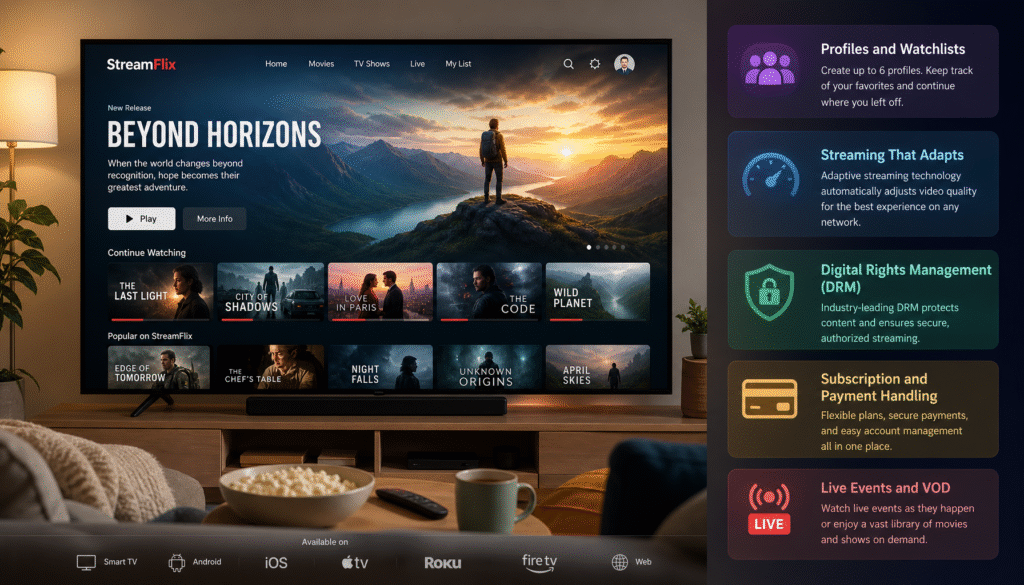
An easy interface, personalized recommendations, searchable libraries, secure payments, and analytics to keep you in the loop.
Essential capabilities include:
- Profiles and watchlists
- Streaming that adapts to network speed
- Digital rights management (DRM)
- Subscription and payment handling
- Support for live events and VOD
These aren’t just nice-to-haves. They’re what make your service work for real people, keep your content safer, and help everyone have a smoother viewing experience.
Managing And Distributing OTT Content Efficiently
Managing and distributing content takes some organization. Keep your media library clean, your metadata accurate, and your workflows automated. Media Asset Management tools help you label, search, update, and publish content across all your platforms. For example, you’re a broadcaster—you can sort your news, sports, and entertainment, then push the right versions to web, mobile, smart TVs, and FAST channels without mix-ups.
Also Read: Why an End-to-End OTT Software Solution is Essential for Content Creators
How Do OTT Platforms Actually Make Money?
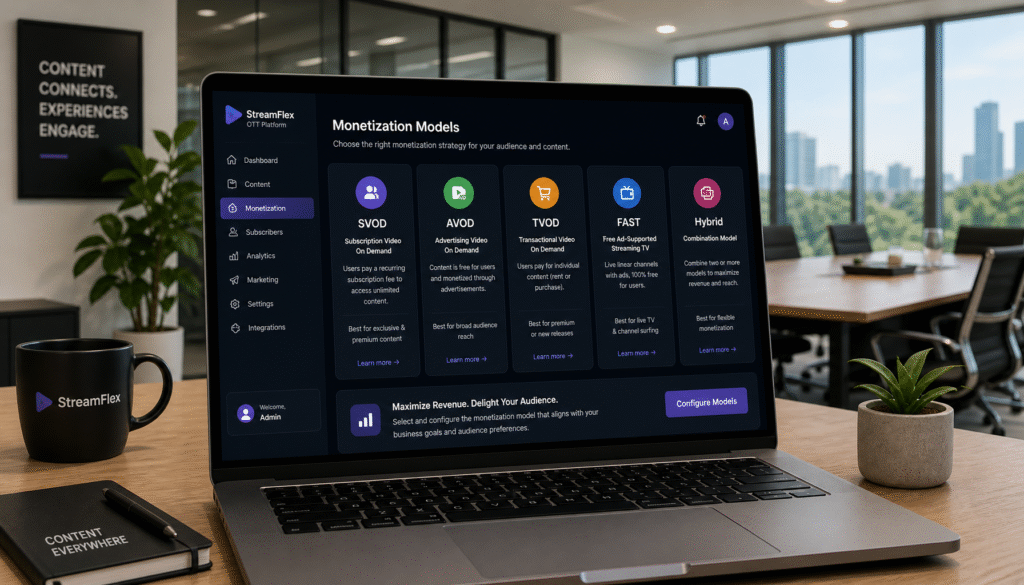
There are several monetization models to use depending on your audiences and content strategy.
- SVOD (Subscription Video-on-Demand): recurring revenue from subscribers through monthly/yearly subscriptions.
- AVOD (Advertising Video-on-Demand): free content supported by ads.
- TVOD (Transactional Video-on-Demand): pay-per-view rentals and sales.
- FAST (Free Ad-Supported Streaming TV): ad-supported free TV-style channels.
You can mix and match, too. Hybrid models can combine subscriptions and advertising to reach a wider audience.
How Can BOSS Studio Help?
Now, let’s talk about handling the workflow. BOSS Studio is a broadcast workflow and media management platform. It’s not a replacement for app development but it does organize your content, helps with metadata, automates schedules, manages versions, and sends each piece where it belongs—in the cloud or on your own servers. That means less chaos and easier scaling as your business grows.
BOSS Studio supports:
- Central media asset management and content organization
- Smarter metadata handling and version control
- Automated scheduling and workflow management
- Distribution to multiple platforms at once
- Flexible cloud or on-premise setup
This means less manual juggling, smoother operations, and easier scaling.
Also Read: 7 Key Features to Look for in an OTT Software Solution
Conclusion
Building an OTT platform in 2027 is more than just launching an app. You need infrastructure that can grow, a way to earn money, secure delivery, and clean workflows. Automate where you can, test everything, and invest in tools like BOSS Studio who’s centralized approach makes content management and coordination a lot simpler, setting you up for long-term success.
Ready to make OTT management easier? Check out BOSS Studio with a demo—it could be just what you need to get your content up and running without the usual mess.
Also Read: How White Label OTT Platforms Help You Build Your Own Netflix-Style Service
Frequently Asked Questions
1. What’s an OTT Platform and how does it work?
A platform that lets you stream videos to viewers right over the internet—no cables or satellite dishes involved. Either live or on-demand, using apps, a content manager, and the right backend tools.
2. How much does building an OTT platform cost in 2027?
Depends on how complex your platform is. The tech you pick, licenses, features—all those choices add up. If you’re on a budget, it’s smart to launch with the basics first. Build a minimum viable product, then expand once you know what works.
3. What tech do you need to launch?
You’ll need cloud hosting, video encoding, a strong CDN, to stream smoothly, plus web and mobile app. Not forgetting databases, secure payment gateways, and tools for content management and analytics.
4. How do OTT platforms earn revenue?
There are a few options: subscriptions, ads, pay-per-view rentals, or a combo. The right approach depends on your content and your audience.
5. How long does it take to build one?
Timelines vary. Simple service? A few months. Complex, multi-device platform? considerably longer
6. Can broadcasters launch their own OTT platform?
Yes, absolutely. They can build a branded streaming apps, license solid tech, and integrate content management workflows to reach their audience directly.
7. How does BOSS Studio help manage OTT workflows?
It centralizes media assets, metadata, scheduling, version control, and distribution workflows. Makes everything easier to coordinate and manage across digital platforms.