
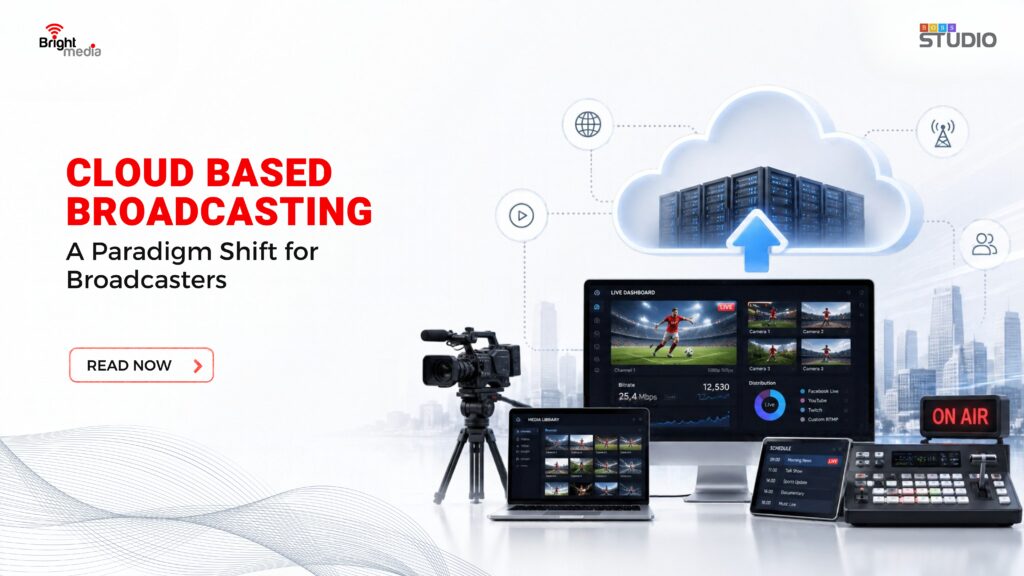
Cloud Based Broadcasting: A Paradigm Shift for Broadcasters
Cloud-based broadcasting is really changing the game for broadcasters. It’s making it easier to manage content, connect workflows, and scale up digital operations.
With everything in the cloud and flexible media tools, teams can work together more efficiently, simplify the process and adapt to the evolving needs of content distribution. Of course, going live on this new setup isn’t as simple as flipping a switch – you need solid planning, secure integrations and reliable workflows in the bag.
That’s where BOSS Studio comes in. It gives broadcast teams a practical way to organize their media assets, manage metadata, and coordinate content operations—even as their environments evolve.
Also Read: The Role of Cloud Technology in Broadcast Scheduling
What Is Cloud Based Broadcasting All About?

Basically, you’re using cloud computing to run your broadcast operations and to manage your content, but you’re also enabling remote workflows as well. You can run things in a public cloud, go private, or have a mix of both with a hybrid approach, whatever you need. You have the flexibility to pull the resources you need, when you need them, without sacrificing security and keeping your operations running smoothly.
Key Takeaways:
- Using cloud infrastructure means you can be flexible and scale whenever necessary.
- Remote teams can work together smoothly, no matter where they are.
- Media gets organized in one spot, making it easier to find and manage everything.
- You can modernize gradually, instead of making one giant leap.
- But don’t forget: success depends on having strong plans for security and integration.
Why Is It Changing the Broadcasting Industry?
Old-school broadcast setups rely heavily on equipment and tech in one location—and coordinating all that stuff can get messy. With cloud solutions like BOSS Studio, broadcasters get options: move resources around, collaborate from anywhere, and adapt workflows as things change. You don’t have to rip out every system you already have, either. Cloud solutions let you upgrade what’s needed, when it makes sense—so teams can weigh the tech, budget, and priorities before diving in.
Also Read: How Cloud Broadcasting Enhances Efficiency and Flexibility for TV Channels
What Are The Benefits Of Cloud Based Broadcasting?
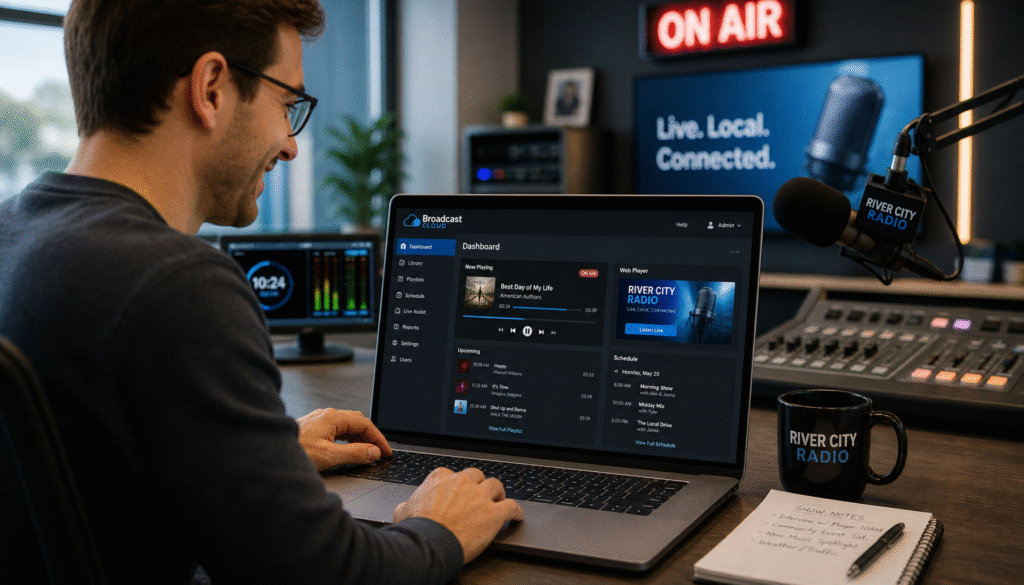
Cloud adoption improves operation in several ways:
- Scaling is simple, just add or reduce computing and storage as your needs change.
- Remote collaboration gets way easier—staff across all locations can coordinate workflows more efficiently.
- Keeping content organized is easier, and your metadata stays consistent.
- Workflow automation saves teams from dealing with repetitive admin work.
- Organising content for different distribution channels is less chaotic.
These perks depend on implementation quality—connectivity, integration, and ongoing management all matter.
How Does Cloud Technology Actually Streamline Broadcast Workflows?
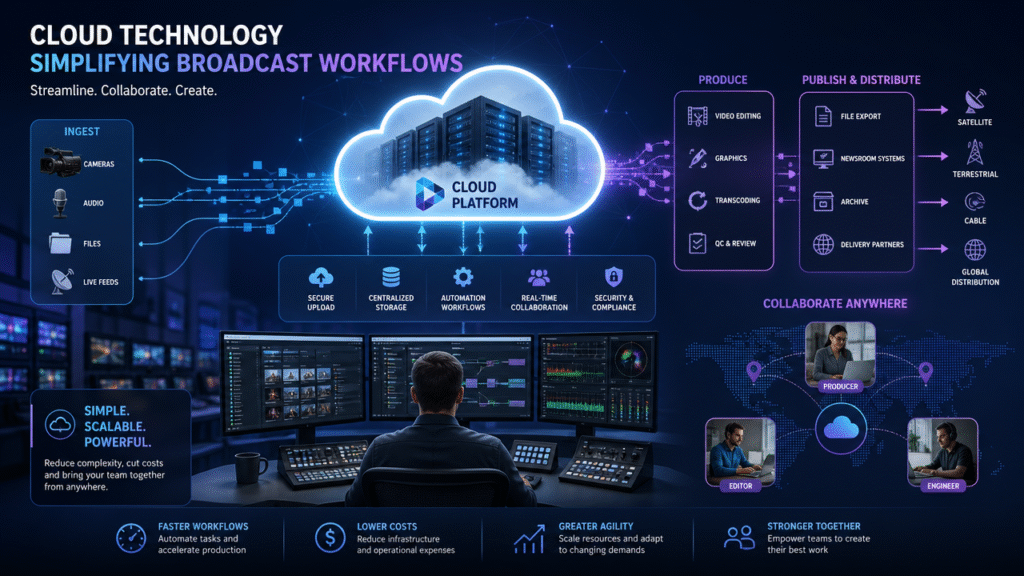
Cloud infrastructure supplies the computing and storage muscle, while media management keeps your assets and metadata in line. Automation takes care of those tedious repeat tasks, moving information between systems and teams.
Imagine a broadcaster with offices in a bunch of cities. They can use shared workflows to organize incoming content, update metadata, and prep everything for distribution. Everyone gets a clear picture of what’s happening, no matter where they are, and not every operation has to run fully in the cloud.
Also Read: Boost Channel Efficiency with Cloud-Based TV Station Software
What Should Broadcasters Watch Out For?
Think about cybersecurity, who gets access, how well everything connects, the migration headaches, and staying reliable. Costs add up, too, so plan for that and set up backup and recovery strategies. Rolling out cloud adoption in phases helps dodge disruption: pick the right workflows, check what you’ve already got, test before launching, and scale up as you see real results.
How Does BOSS Studio Support Cloud Based Broadcasting?

BOSS Studio acts like your broadcast headquarters—it organizes content, handles metadata, keeps scheduling workflows humming, and automates key processes. The platform brings in features like version management, integration with media asset management systems, and delivers playlists using FTP, SFTP, or S3. Its cloud-ready design makes it easy to fit into broadcast environments that are transforming—so you can plug it in based on your needs.
Also Read: Choosing the Right Broadcast Media Solutions for Modern Operations
Conclusion
Cloud based broadcasting gives broadcasters freedom to manage resources, connect teams, and modernize operations without rigid setups holding them back. But you can’t ignore the essentials—security, integration, and workflow planning are the bedrock of long-term success. BOSS Studio helps you pull this all together, so you can start running smarter content operations for your business.
Frequently Asked Questions
1. What Is Cloud Based Broadcasting?
It uses cloud computing to run broadcast operations and handle media workflows. Broadcasters pick cloud or hybrid approaches to suit their needs.
2. Why Are Broadcasters Making This Change?
They want more flexibility, smooth remote teamwork, and resources that can scale easily. Cloud workflows also make content management easier.
3. How Does BOSS Studio Help With Cloud based broadcasting?
BOSS Studio helps teams manage content, metadata, and run broadcast workflows. How well it fits depends on your deployment choices and integrations.