
OTT CMS: Managing Your Video Content at Scale
OTT CMS is the backbone of modern video streaming platforms. But when people think about launching an OTT platform, they usually picture the front end. The app interface. The sleek thumbnails. The streaming player that loads quickly and looks smooth.
That’s understandable. The front end is what viewers see.
But scale doesn’t break on the front end. It breaks behind it.
It breaks when content libraries grow faster than expected. When metadata becomes inconsistent. When teams upload the same file twice because no one is certain which version is final. It breaks quietly, and then all at once.
That’s where an OTT CMS really starts to matter.
Scale Isn’t Just About More Content
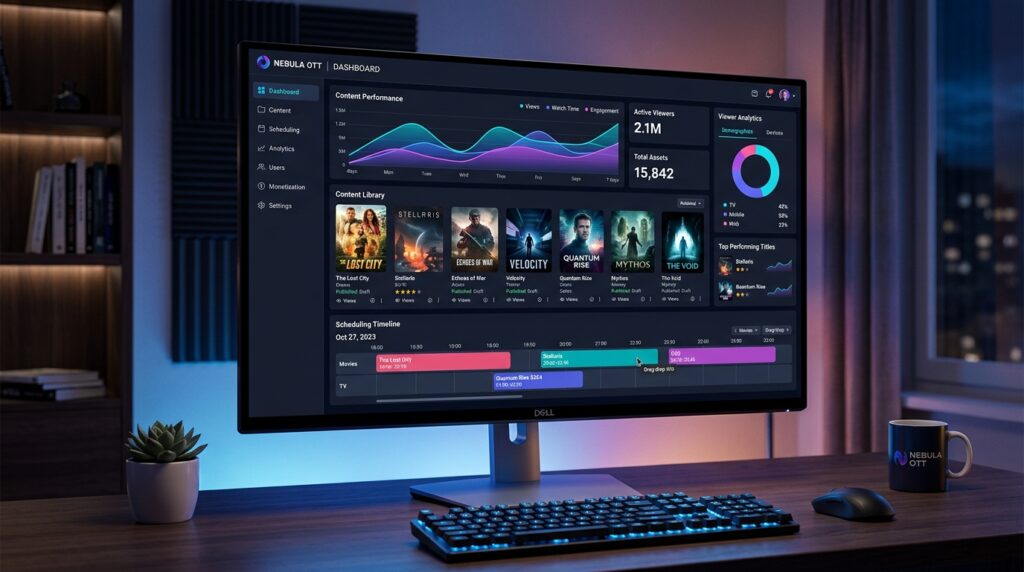
At first, scale sounds exciting. More titles. More episodes. More viewers. Growth feels like momentum.
But operationally, scale is heavier.
More content means more categorization. More language variations. More rights windows. More promotional assets. And each of those comes with decisions. Small ones, mostly. But thousands of them.
A good CMS software built for OTT doesn’t treat video as just another file. It understands the structure around it. The metadata. The scheduling. The monetization logic. It keeps things organized when growth gets messy. And growth does get messy.
Also Read: The Future of CMS Software: Trends to Watch in 2026
The Hidden Complexity of a Custom OTT Platform

Building a custom OTT platform sounds empowering. And it is. You get control. You get flexibility. You’re not boxed into someone else’s template.
But customization also multiplies decisions.
How should content appear by region?
How do you manage early-access releases?
What happens when subscription tiers change?
Without a strong OTT CMS underneath, those decisions turn into manual work. And manual work doesn’t scale well.
The CMS becomes the quiet engine that keeps customization from becoming chaos.
Metadata Is Where Scale Either Succeeds or Fails
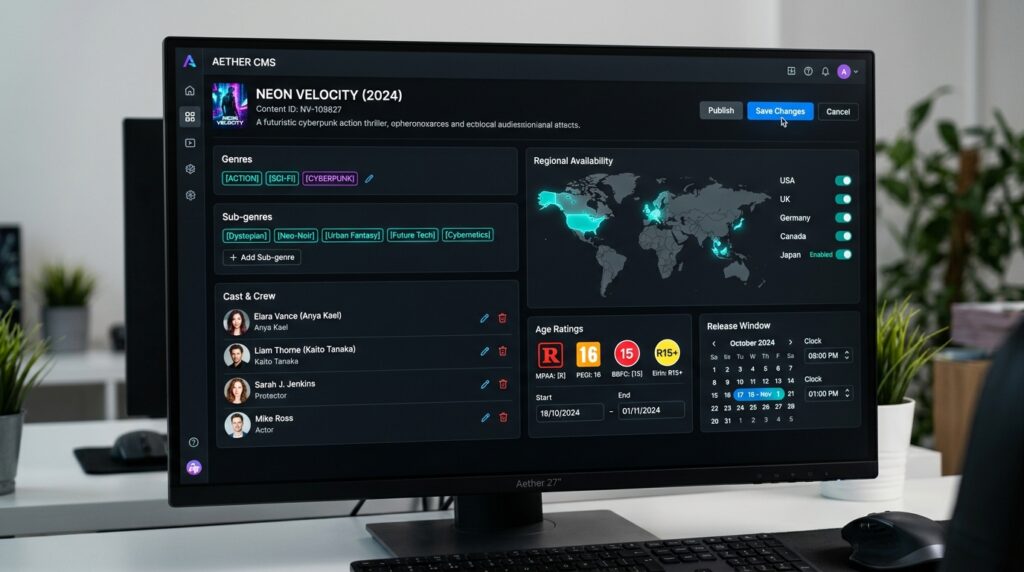
No one launches an OTT service thinking metadata will be their biggest challenge. Yet it often is.
Genres. Sub-genres. Tags. Cast lists. Regional availability. Age ratings. Release windows. The more content you add, the more metadata multiplies.
If your CMS software doesn’t enforce structure, inconsistencies creep in. A show tagged one way today might be tagged differently next week. Search becomes unreliable. Recommendations weaken.
Scale requires discipline. A good OTT CMS makes discipline easier.
Also Read: How White Label OTT Platforms Help You Build Your Own Netflix-Style Service
Multi-Device Publishing Without Manual Duplication

OTT content doesn’t live in one place. It flows across apps, web portals, smart TVs, and sometimes partner platforms.
Managing these endpoints manually is not sustainable. Especially as your content volume increases.
An OTT CMS built for scale ensures content can be published once and distributed everywhere correctly. Formats adjust. Assets map properly. Availability rules apply consistently.
That automation isn’t flashy. But it saves hours. Maybe days.
Conclusion
An OTT CMS should do three things quietly and consistently:
- Keep content organized.
- Keep workflows efficient.
- Keep growth manageable.
For anyone building a custom OTT platform or expanding their own OTT platform, the CMS isn’t a background tool. It’s the operational center. And at scale, the operational center determines whether growth feels sustainable or overwhelming.
Sometimes, the difference between thriving and scrambling isn’t content quality. It’s the system holding everything together.
BOSS Studio provides a scalable OTT CMS that simplifies complex workflows, streamlines content delivery, and supports business growth.
Also Read: Beyond Video Hosting: Why an Intelligent CMS is the Heart of Any OTT Platform
FAQ’s
1. What is an OTT CMS?
An OTT CMS is a content management system designed specifically to organize, publish, and manage video content for streaming platforms at scale.
2. Why is CMS software important for a custom OTT platform?
CMS software helps structure content workflows, manage metadata, and ensure smooth publishing across devices, which becomes critical as the platform grows.
3. How does an OTT CMS support scaling an own OTT platform?
It centralizes content control, automates multi-device distribution, and maintains consistent metadata, making growth more manageable.
4. Can a regular CMS handle OTT video platforms?
Not effectively at scale. OTT platforms require specialized CMS software that understands streaming workflows, rights management, and monetization models.
5. What should I look for in OTT CMS software?
Look for strong metadata management, workflow automation, scalability, multi-device publishing support, and built-in monetization flexibility.