
What to Look for in a Broadcast Traffic Software: A Broadcaster’s Checklist
Today, broadcasters are managing an increasing number of channels and platforms, as well as their associated ad inventories. As a result, having the correct Broadcast Traffic Software is vital for operational efficiency with all the various options available, from linear (TV) to OTT (over-the-top) and FAST (free ad-supported streaming television) channels. The choice you make regarding which Broadcast Programme Management Software is best suited for you will not only affect your technical capabilities but will also have a commercial impact on revenue; therefore, it is also a strategic decision.
Within this checklist for broadcasters, we provide you with critical features and capabilities that you should thoroughly review when selecting a Traffic Management System.
Also read – Maximizing Ad Revenue with Intelligent Broadcast Traffic Solutions
1. Centralized Traffic & Scheduling Management
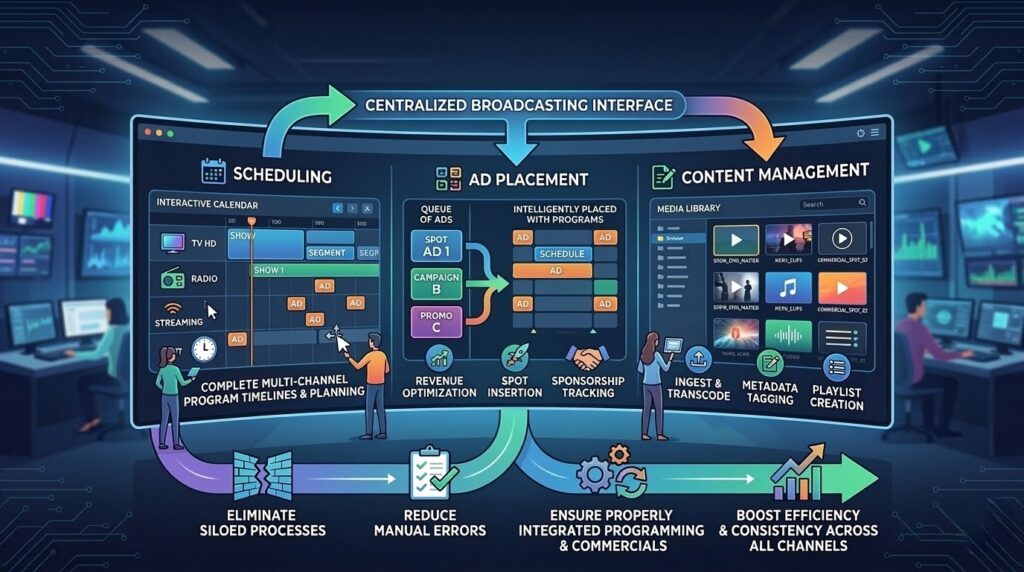
The Traffic software used to manage broadcasting should be able to provide all aspects of Scheduling, Ad Placement and content management from a single interface. By centralizing these operations under one roof, you will eliminate areas of siloed business processes, reduce manual errors and ensure programs, promos and commercials are properly integrated across all channels.
Your software should support your channel types (linear, OTT and FAST) under a single common workflow structure.
Also read – Top Broadcast Traffic Scheduling Systems Compared
2. Automating Processes to Safer Operations
Broadcasters don’t have a choice but to invest in automation to make their processes more efficient. Automated workflows enable broadcasters to free up time and reduce high-risk manual errors when completing tasks from ad bookings through to schedule reconciliations. Today’s modern software systems take care of numerous recurring functions without any human effort. With the aid of automation, the focus of traffic teams can now be on the development of strategies rather than simply focusing on the completion of repetitive functions.
3. Revenue Enhancement and Ad Sales
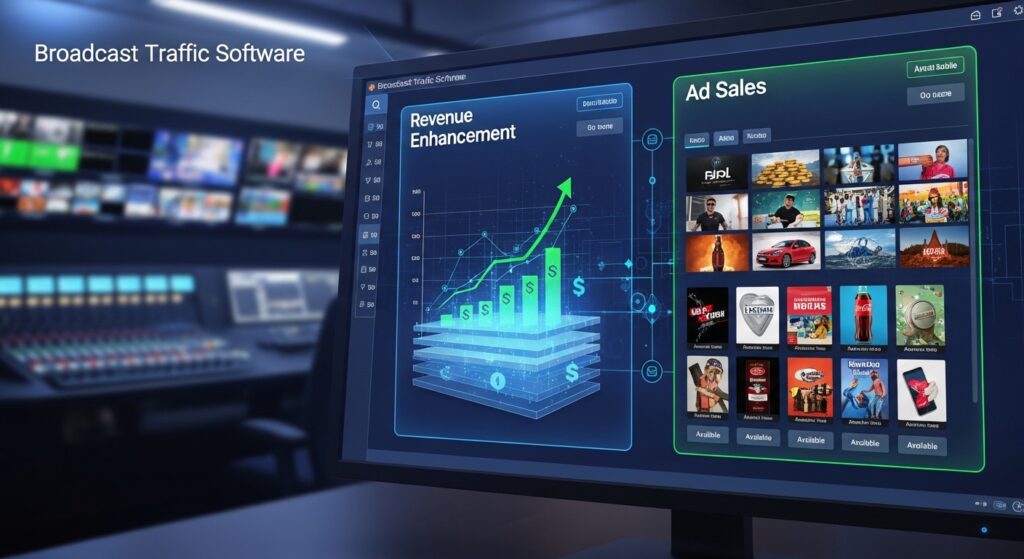
Your monetization process is heavily dependent on your traffic system. A proper Broadcast Traffic Software should easily integrate with the ad sales processes, including tracking your inventory, managing your spots, and predicting your revenue. This will ensure that every second of airtime can be maximally utilized to increase profits and honour advertisers’ commitments.
4. Compliance, Reporting & Accuracy
Compliance with broadcasts is essential. It can result in fines and lost trust if we miss a commercial, if logs are not tracked correctly, or if we violate any regulatory conditions. A great traffic system should provide the following items for broadcast compliance:
- Accurate log reconciliation
- Audit-Ready Report
- Real-time alerts for discrepancies
Clear, customizable reports help teams stay compliant and informed.
Also read – The Ultimate Guide to Streamlining Broadcast Traffic and Scheduling
5. Scalability and Future-Proofing
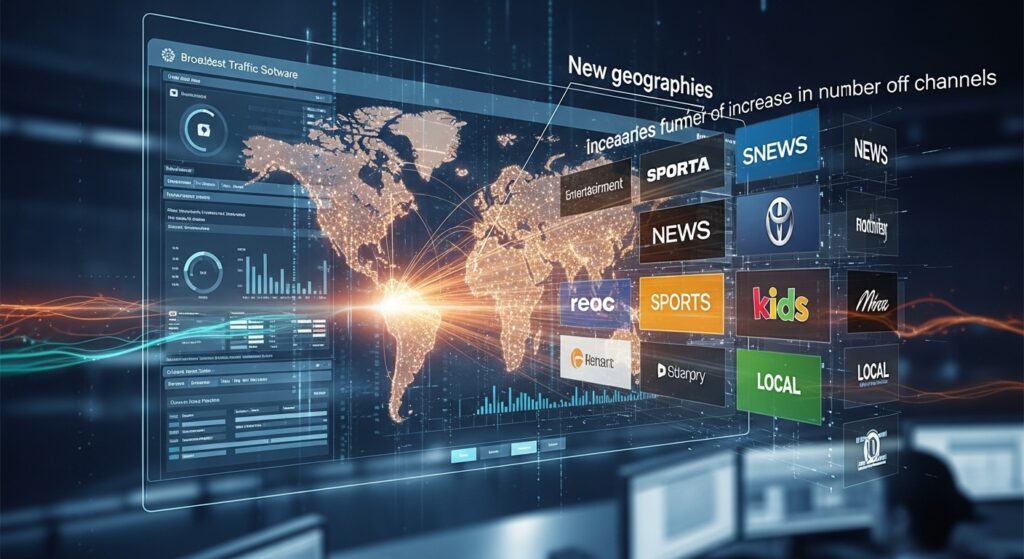
When broadcasters look to exploit new geography or increase the number of channels they offer in their markets, the software should scale easily. The best type of software for broadcasters to expand is a cloud-based, modular solution, as those types of systems can grow to meet their needs without interrupting their current operations.
By investing in a system that has future readiness built into it, broadcasters can be assured that their investment will continue to be valuable as the broadcasting industry develops.
Also read – Why Your OTT Platform Needs a Powerful CMS Software
Conclusion
When it comes to improving efficiency and accuracy while maximizing revenue control for Broadcasters, selecting the appropriate broadcast traffic software is critical. A strong focus on Automation, Centralized Management, Compliance with industry standards and scalability will enable broadcasters to prepare for future growth in the rapidly evolving world of broadcasting including Linear, OTT and FAST channels. The modern unified and automation-driven approach of BOSS Studio will enable broadcasters to streamline their traffic workflow and be prepared to grow in this continually changing and complex broadcasting environment.
FAQ’s
1. What is Broadcast Traffic Software used for?
Broadcast Traffic Software is a tool that helps you manage your broadcast television scheduling, placement of advertisements, and traffic workflow so you can operate your broadcasts without any interruptions and accurately track revenue.
2. How does Broadcast Traffic Software help improve efficiency?
By automating your ad sales traffic (bookings and scheduling) processes as well as your reconciliation and reporting processes, it eliminates the need for a lot of manual effort, reduces mistakes and decreases delays to your operations.
3. Is Broadcast Traffic Software appropriate for OTT and FAST channels?
Absolutely. Modern solutions such as BOSS Studio can accommodate both linear, OTT, and FAST channel operations.
4. What are the advantages of using BOSS Studio to manage broadcast traffic for broadcasters?
BOSS Studio is an adaptable, automation-centric Broadcast Traffic Solution. BOSS Studio meets the demands of today’s broad multi-channel television broadcasting environment.
5. Is Broadcast Traffic Software a tool for helping to comply with any regulations?
It is a tool for helping you to comply with your regulations, as well as your requirements for logs, audit-ready reports and alerts in real-time for both regulatory issues and advertisers.