
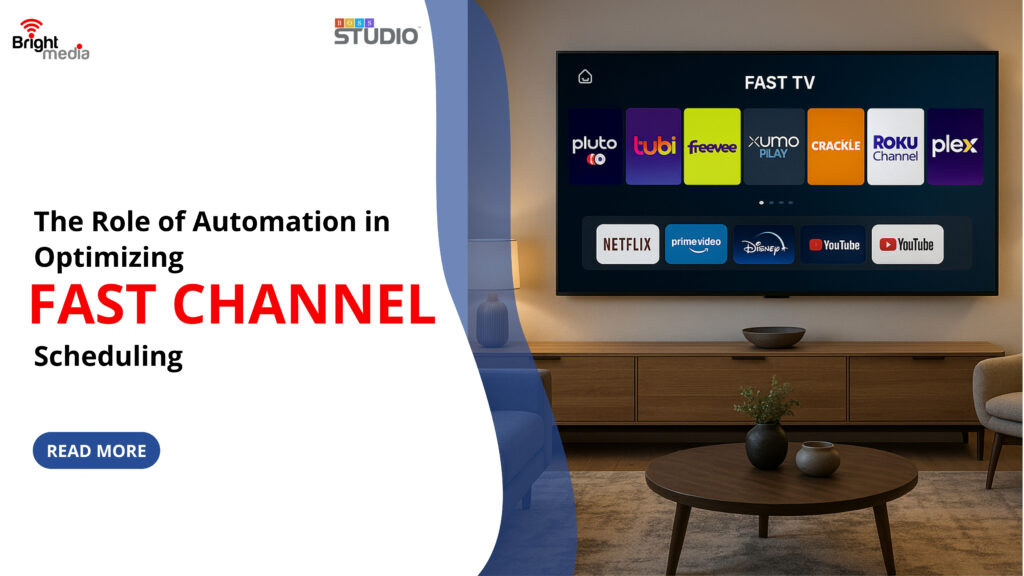
The Role of Automation in Optimizing FAST Channel Scheduling
Broadcast networks and content providers have witnessed rapid growth in the emergence of free ad-supported live streaming TV (FAST). Viewers are increasingly shifting from traditional TV to on-demand and continuous viewing of programming supported by advertising. With the growing demand for ad-supported video, particularly through FAST channels, programming and scheduling across multiple platforms has evolved from a straightforward manual task into a highly complex operational function. By embracing automation, FAST channel operations are now able to streamline workflows, reduce errors and achieve new levels of efficiency and performance.
Also read – Why FAST Channels Are the Future of Streaming Television
Why FAST Channel Scheduling Is More Complex Than Ever

Scheduling a FAST Channel is not like linear TV at all. Content libraries are now bigger, audience behaviour changes more rapidly and monetization hinges on things like the timing of ads and viewer retention. Schedulers must consider: Content rotation frequency, Dayparting strategies, Genre clustering, Ad break placement, Platform-specific requirements and EPG accuracy.
Doing all this work by hand is time-consuming and subject to error. Even minor scheduling errors can result in dead air, redundant content blocks or missed ad opportunities. Automation minimizes these risks and produces high quality channels overall.
How Automation Streamlines FAST Channel Operations
1. Automated Smart Scheduling
With the capacity to schedule using automation, broadcasters can schedule smartly based on the content’s metadata and the Genre, Run-Time. Instead of creating and building a Playlist, Automated Systems can create a schedule that maximizes the Rotation of Content while Minimizing Viewer Repetition and the resultant Engagement Time on each of the FAST Channels.
Also read – Top FAST Channel Platforms Powering the Future of Free Ad-Supported Streaming in 2026
2. Better Management of Advertising
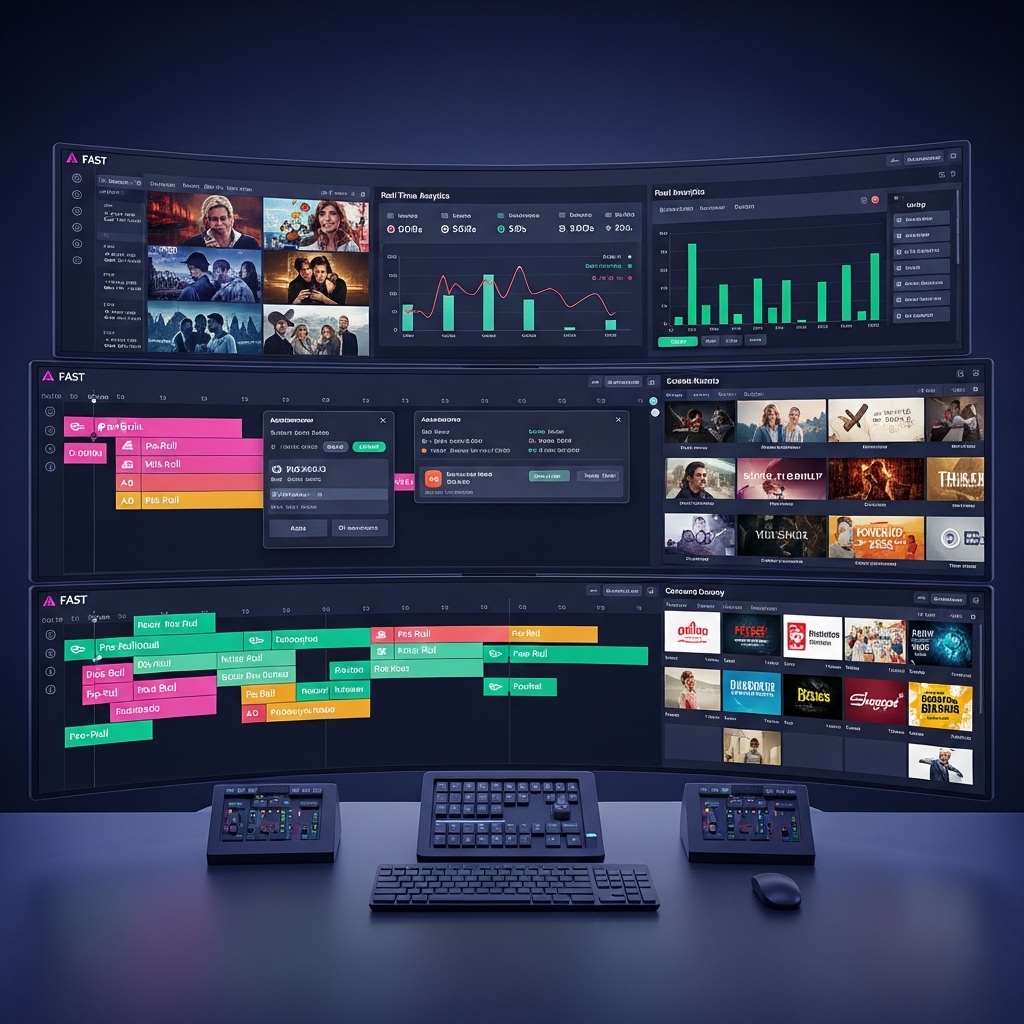
Placement of advertising is important for being able to monetize them; thus, having tools set up that automatically schedule advertising breaks will allow broadcasters to set advertising breaks correctly according to the platform’s specifications while also ensuring that there are no conflicts between the breaks. As a result of this, Ads will be delivered effectively without compromising viewer experience and maximizing both fill rates and revenue for the advertiser.
3. Instantaneous Changes and Adaptability
FAST environments are fluid and flexible; allowing dynamic changes to the scheduling of programming in response to changes in user rights, extended live events, or other emergency scenarios requiring urgent updates. Maintaining agility allows for continuous operations across all platforms of FAST Channels.
Also read – The Rise of FAST TV: What It Means for Content Owners
4. Maintaining Compliance and Minimizing Risk
Staying in compliance and mitigating risk is an essential component of any FAST Channel’s automatic scheduling. Add to these competing multiple platforms who each have their own rules around content, ad load limits and metadata requirements, and the power for humans alone to police what is being posted can be easily lost. Automation can assist, by automatically enforcing compliance across schedules, identifying conflicts and stopping restricted or expired material from going to air. It keeps reliable logs and audit trails that are critical for reporting and dispute resolution. By integrating compliance checks into the scheduling process, broadcasters can minimise risk as well as ensuring readiness for delivery on to a platform.
5. Channel Management Growth
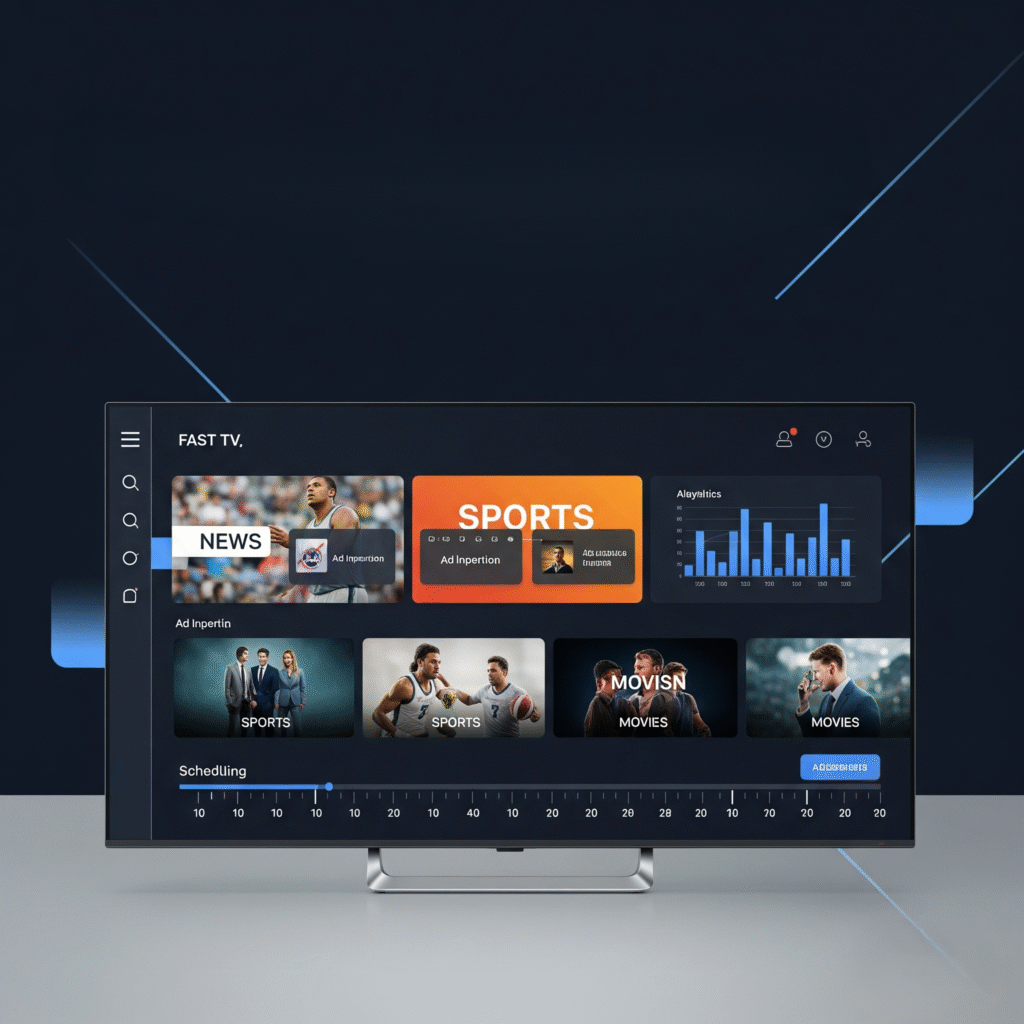
When a company starts adding multiple FAST channels to its portfolio, they need automated management as part of their process. Using BOSS Studio, that providers you with automated tools that helps you to streamline your processes to enable scalability for your FAST channels while also offering you control to enable you to focus your time on growth strategies instead of tedious manual workflows.
Also read – FAST TV vs. Traditional Streaming: What Broadcasters Need to Know
Conclusion
Automation has become an essential component of the FAST ecosystem today and has evolved into a key competitive advantage. The use of automation simplifies the scheduling process, improves compliance, and makes it possible to create data-driven decisions, ultimately leading to a more consistent and engaging viewer experience across FAST Channels. BOSS Studio enables broadcasters to manage complexity easily, allowing them to confidently scale their FAST strategies.
FAQ‘s
1. What is a FAST Channel and why does it need automation?
A FAST Channel is a free ad-supported streaming channel, and with the complexity associated with the scheduling and ads of a typical FAST channel at scale requires automation to handle this process.
2. How does BOSS Studio support FAST Channel scheduling?
BOSS Studio provides a single platform for automated scheduling, ad break management, compliance controls, and analytics for the entire lifecycle of a FAST Channel, in real time.
3. How does using technology to do things automatically help a FAST channel to monetize better?
Yes, by using automated promo and ad placement and accurate scheduling, you will be able to get the most use out of your advertising inventory and therefore have less revenue lost due to underutilization.
4. In which ways do BOSS Studio mitigate risk associated with the management of FAST Channel operations?
Using BOSS Studio allows broadcasters to adhere to platform guidelines, reduce error rates, and provide real-time feedback. This helps to minimize the likelihood of disrupting the operations of a FAST Channel due to operational error.