

How TV Broadcast Automation Transforms the Way You Schedule, Stream, and Manage Content
Have you ever thought about how major TV networks keep their 24/7 channels running so smoothly? In today’s speedy pace within the media industry, keeping up with 24/7 programming, multiple platforms and unlimited audience demands is more complex than what many in the world of traditional broadcasting can handle.
Broadcast Automation was designed to break down how broadcasters schedule, stream, and generally manage their operations. By allowing the automation of repeated processes and centralized control for scheduling, and so on — Broadcast Automation allows the industry professionals time off the routine and operational and further their abilities into a creative process. Every step of the workflow features precision, flexibility, and scalability. Making sure every second aired runs with impeccable flawlessness.
Also Read: The Future of Broadcast Traffic: Automating Scheduling for Maximum Efficiency
1. Efficient Scheduling for Fluid Operations
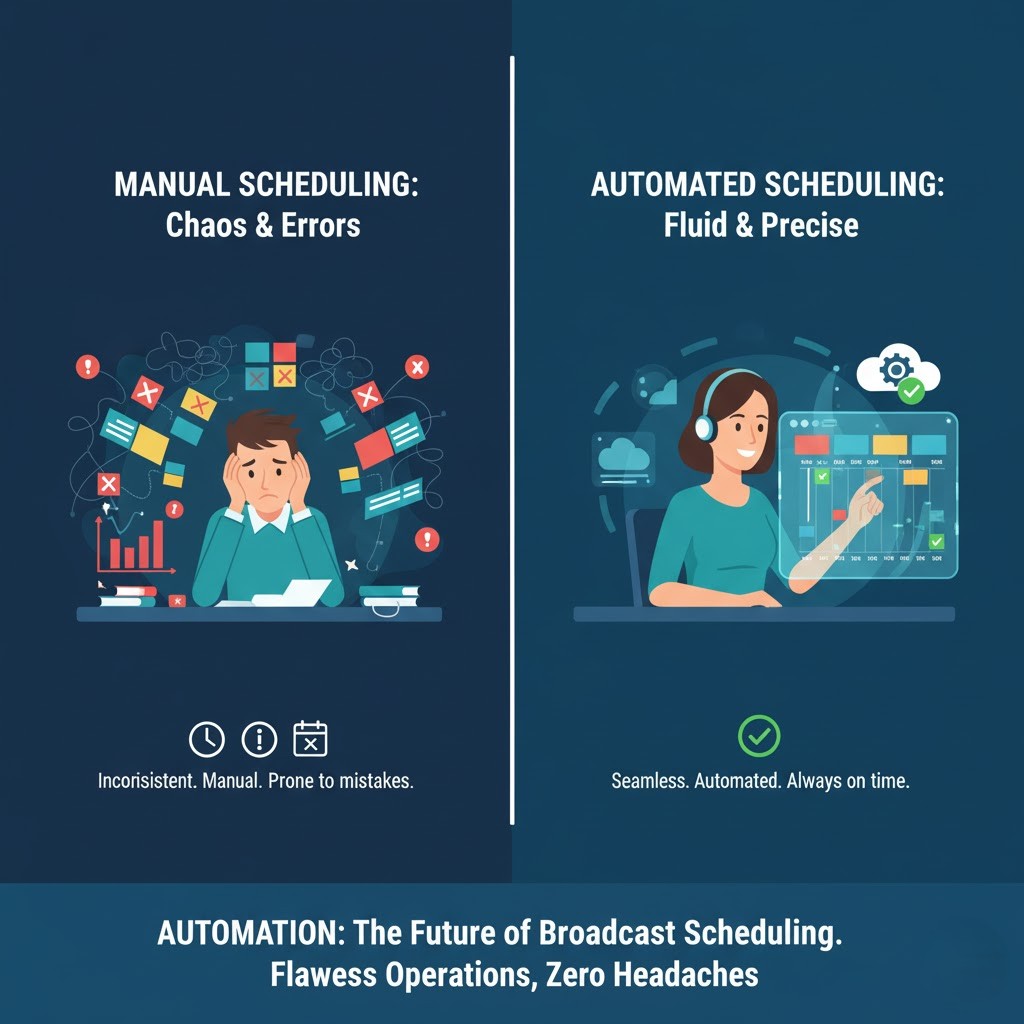
With broadcast automation, scheduling is fast and without any mistakes. Automation systems allow broadcasters to make their programming assignments for programs, ads, and promos, pre-scheduled for smooth operations – instead of assigning tasks manually and updating them all the time, your schedules are automatically set whenever you need them. Automated scheduling makes it more consistent – everything is on time and there are fewer instances of overlap, mistakes, or missing broadcasts.
2. Intelligent Content Management
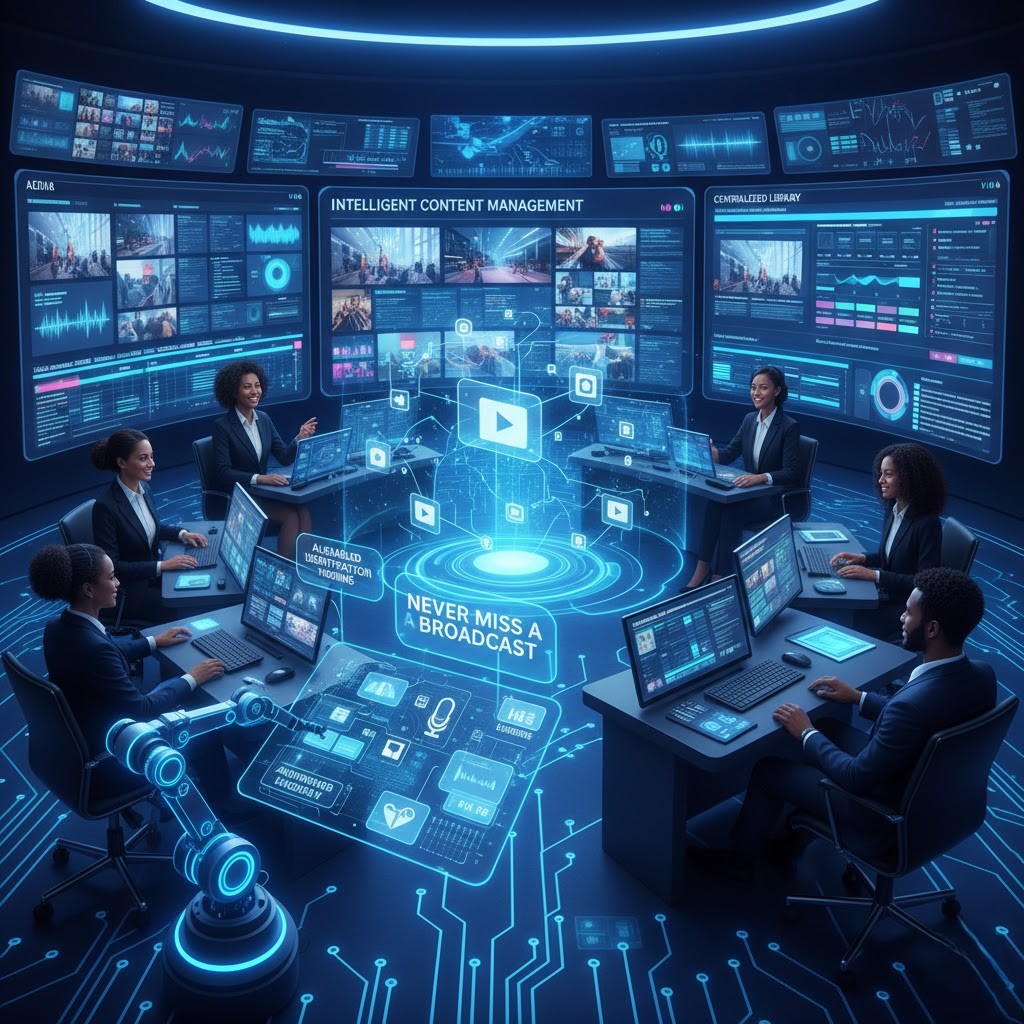
Automated systems centralize all your content – from live shows to pre-recorded episodes to clips – into a digital library. This allows broadcasters to access and organize content at a heightened pace rather than searching for that content in multiple folders and drives. Automated tagging and AI-enabled identification of content provide efficiency, and we’re confident you’ll never miss a broadcast.
Also Read: How Smart Traffic Scheduling System Can Save Resources Time
3. Simple Multiplatform Streaming
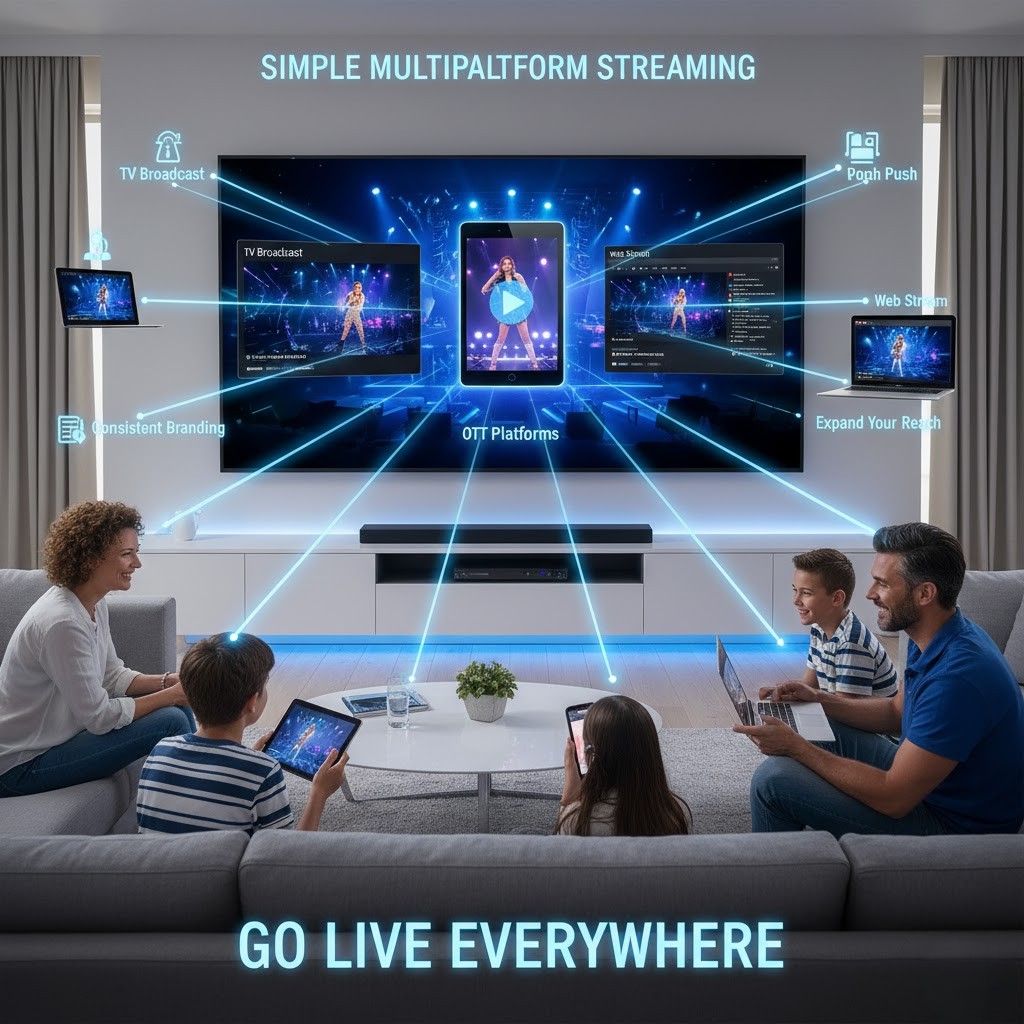
As audiences are everywhere today, automation can be used for simultaneous streaming on TV, web, and OTT platforms. With just one system, you can schedule and push content to multiple platforms in moments. In doing this, you will not only expand your reach but also create consistent branding and quality across every outlet.
4. Real-Time Monitoring & Error Reduction
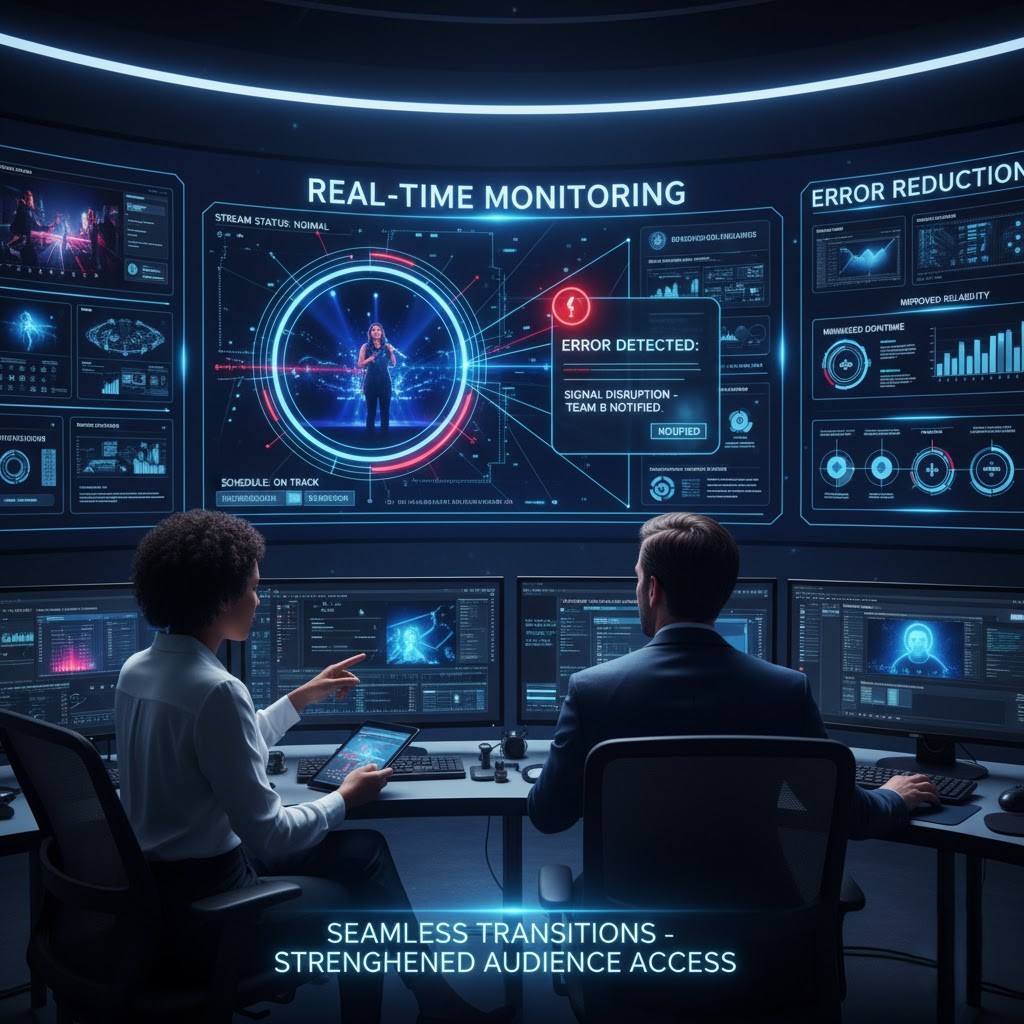
Automation tools will monitor streams and schedules in real time and notify the appropriate teams as discrepancies. This proactive way of working minimizes downtime and improves broadcasting reliability while allowing you to transition between content seamlessly. The net effect is less time spent doing manual monitoring and more time spent producing creative work and strengthening audience access.
Also Read: Top Benefits of Television Scheduling Software for Broadcasters and Media Houses in 2025
5. Cost-Effective & Scalable Operations

TV broadcast automation considerably reduces costs by lessening manual interventions and repetitive tasks. Automation can also scale up and down easily, whether you’re running a local channel or a major media network, with the same people, in the same way, letting you handle even more content, more channels, and more viewers.
Conclusion
The broadcast automation is transforming the content development and delivery process by rethinking every single lifecycle of a broadcast: from planning, to scheduling, and finally delivery. Rather than just handling broadcasts, the TV broadcast media sector can now optimize every element of production, delivering speed, accuracy, and creative freedom. With automated systems, a broadcasting organization can deliver complex workflows seamlessly, while minimizing human error, allowing them to deliver predictably consist and high-quality viewing experiences to their audience in every regard.
BOSS Studio takes this transformation one step further. BOSS Studio enables intelligent scheduling, real-time monitoring, and centralized content management for modern broadcasters through a single interface. It allows you to automate the time-consuming tasks, allows distribution to multiple platforms all at once, and empowers you to keep full-scale governance of your entire operation from one powerful dashboard.
Also Read: The Hidden Costs of Poor Traffic Scheduling – And How to Fix It
FAQ’s
1. What is Broadcast Automation?
Broadcast Automation is the technology that automates TV scheduling and content management. It allows broadcasters to run 24/7 operations smoothly without manual intervention, ensuring consistency, accuracy, and time efficiency.
2. What software do TV stations use to broadcast?
Many TV stations use automation platforms like BOSS Studio, which centralizes scheduling, streaming, and content control in one place — making broadcast management faster and more reliable.
3. What is the best broadcasting software?
The best broadcasting software is one that’s scalable, easy to use, and automation-ready. Tools like BOSS Studio stand out because they integrate scheduling, playout, and live streaming with advanced automation features.
4. What technology do broadcasters use?
Broadcasters use a mix of automation systems, cloud playout solutions, and AI-based monitoring tools to streamline their workflows. These technologies reduce manual tasks and improve broadcast quality across multiple platforms.