

How Cloud Broadcasting Enhances Efficiency and Flexibility for TV Channels
Curious how today’s channels can easily publish on every platform — and they don’t even have to use sophisticated hardware or schedule manually? The answer is Cloud Broadcasting. This innovative technology makes it easy for broadcasters to store, share, manage, and play out content using a cloud-based solution that provides the level of efficiency and flexibility.
With solutions such as BOSS Studio, broadcasters can easily play out, automate schedules, and access content anytime, anywhere – reducing the stress and effort in traditional broadcasting to a more intelligent, quick, and efficient process.
Also Read: Top Features to Look for in a Broadcast Scheduling System
1. Access Anytime, Anywhere

With BOSS Studio’s cloud-based traffic and scheduling system, broadcasters are no longer tied to on-site servers or workstations. Teams can manage playlists, make last-minute schedule adjustments and monitor playout remotely – all from a secured cloud environment. Whether it’s updating a show line-up or approving ad placements, everything can be done on the go. This ensures seamless collaboration between departments and uninterrupted operations, no matter where your team is located.
2. Faster Deployment and Seamless Updates
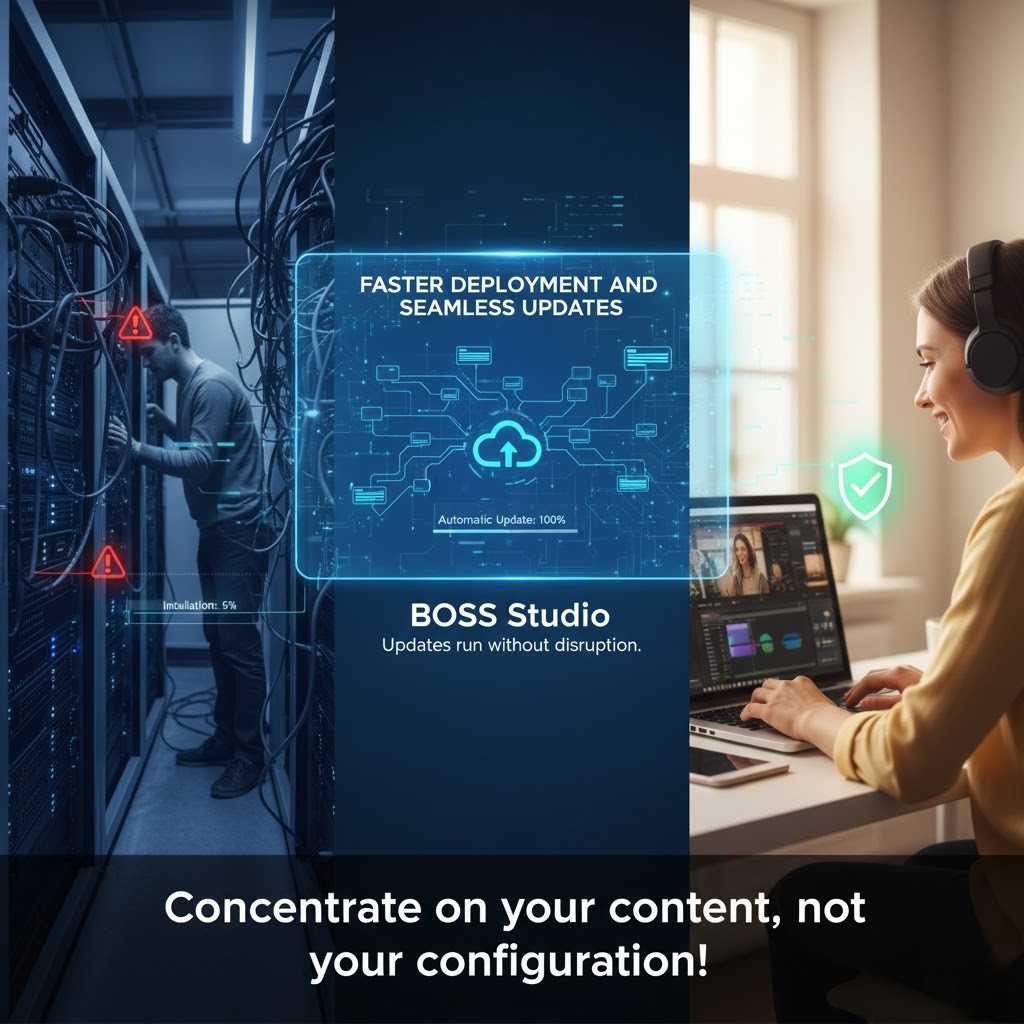
Traditional broadcasting systems usually involve heavy installations, expensive equipment, and ongoing maintenance. Cloud broadcasting gets rid of that trouble. The great thing about cloud broadcasting is the ability to quickly set up and automatically update so that broadcasters are always working with the latest features and capabilities without downtime. With BOSS Studio, the updates run through without disruption, so you can concentrate on your content, not your configuration!
3. Economical and Flexible Growth
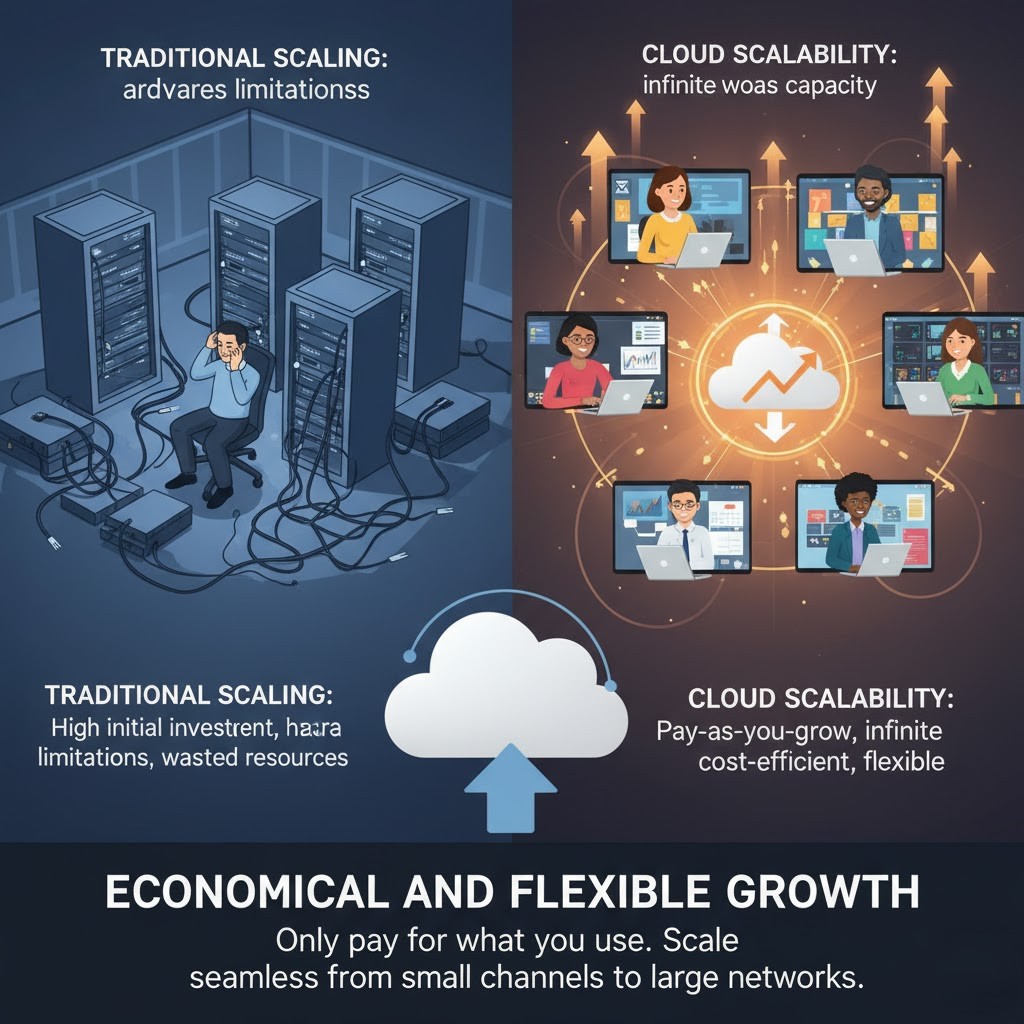
Perhaps the greatest benefit of cloud broadcasting is scalability. You’ll only pay for what you use. When your channel grows, you don’t have to buy new hardware – the cloud infrastructure scales with you, allowing both smaller channels and large media networks to take advantage of our cloud-based services.
Also Read: Maximizing Ad Revenue with Intelligent Broadcast Traffic Solutions
4. Increased Security and Reliability
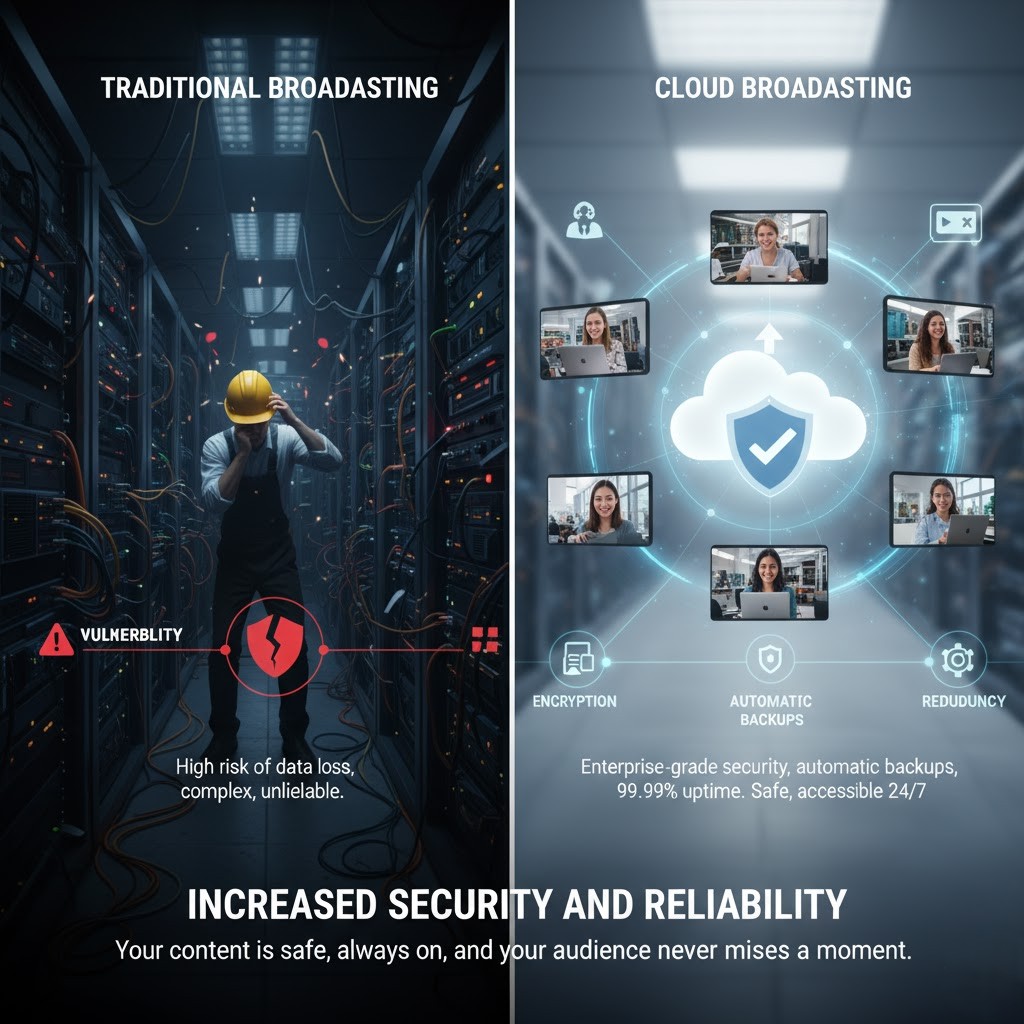
Broadcasting to the cloud may sound risky, but most modern systems come equipped with enterprise-grade encryption, automatic backups, and redundancy protocols to prevent failure on your part. BOSS Studio provides uninterrupted streaming when equipment fails or when there is a technical overload in viewership. Your content will be safe and accessible all day, every day, ensuring that your audience never misses a moment.
Conclusion
Cloud broadcasting is making waves in how TV channels operate, govern, and disseminate content in an increasingly competitive media ecosystem. Cloud technology removes the cost of on-premises infrastructure and enables broadcasters to oversee every aspect of their workflow anywhere and anytime, such as scheduling and playout; live broadcasting; ingesting/distributing.
With BOSS Studio, broadcasters benefit from a comprehensive, cloud-based ecosystem all focused on simplifying channel management. BOSS Studio provides network automation, efficient real-time monitoring and omnichannel delivery – creating an environment where broadcasters can work smarter, faster and with greater accuracy. By simplifying scheduling, optimizing traffic management and ensuring seamless coordination across channels, it upholds broadcast integrity and minimizes operational errors – delivering reliability that no other tool can match.
Also Read: The Ultimate Guide to Streamlining Broadcast Traffic and Scheduling
FAQ’s
1. What is Cloud Broadcasting?
Cloud broadcasting is the management, scheduling, and streaming of television content through cloud systems rather than traditional, on-premises equipment. It relates to giving broadcasters control, scalability, and flexibility from anywhere in the world.
2. How does Cloud Broadcasting improve efficiency?
Cloud broadcasting automates many of the key workflows related to scheduling and content delivery. Cloud broadcasting reduces the use of manual labour, decreases the chances of error, and gives broadcasters time to discover their creative potential, rather than spending their time worried about operational aspects.
3. Is Cloud Broadcasting better than cable or satellite TV?
Absolutely, cloud broadcasting is faster, cheaper, and much more flexible compared to cable or satellite. Cloud broadcasting allows for the elimination of heavy infrastructure, while also managing channels remotely via an internet connection.
4. Why should TV channels switch to Cloud Broadcasting?
Cloud broadcasting provides TV channels a means to reduce operating costs, improve reliability, and scale content across multiple platforms, all while not sacrificing performance.