
Live TV Software: Real-Time Broadcasting Essentials
Live television still carries a certain weight. Even in a world full of on-demand content, there’s something about knowing an event is happening right now that keeps viewers tuned in. News, sports, breaking updates, special broadcasts. Live TV still matters.
But running live TV is stressful. There’s very little margin for error. When something goes wrong, there’s no pause button. No quiet fix in the background. Everyone sees it.
That’s why live TV software isn’t just another tool in the broadcast stack. It’s the backbone that keeps everything moving when there’s no room to stop.
Also Read: What Should Broadcasters Expect from Modern Broadcast Traffic Software?
Why Live TV Is a Different Kind of Challenge?
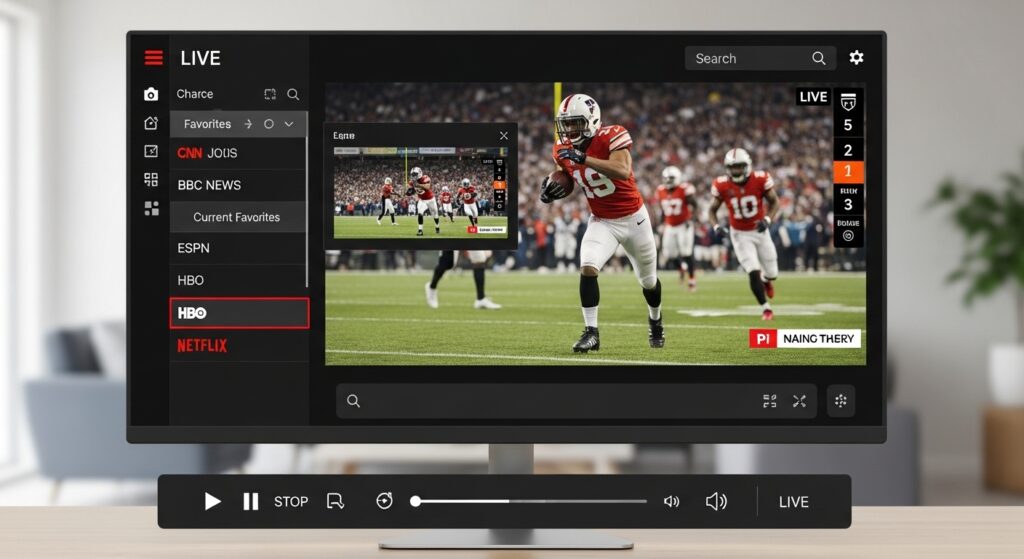
Pre-recorded content gives you time. Time to review. Time to fix mistakes. Time to adjust schedules if needed.
Live TV doesn’t offer that luxury.
Schedules change in real time. Ads shift. Programs overrun. Sometimes a segment ends early. Sometimes it doesn’t end at all when it’s supposed to. All of this needs to be handled calmly, without breaking the flow.
This is where Broadcast Traffic systems and Traffic Software become essential. They’re not just planning tools. They’re control systems for uncertainty.
Also Read: Choosing the Right Radio Broadcast Software: A Station’s Guide
The Role of Traffic Software in Live Broadcasting
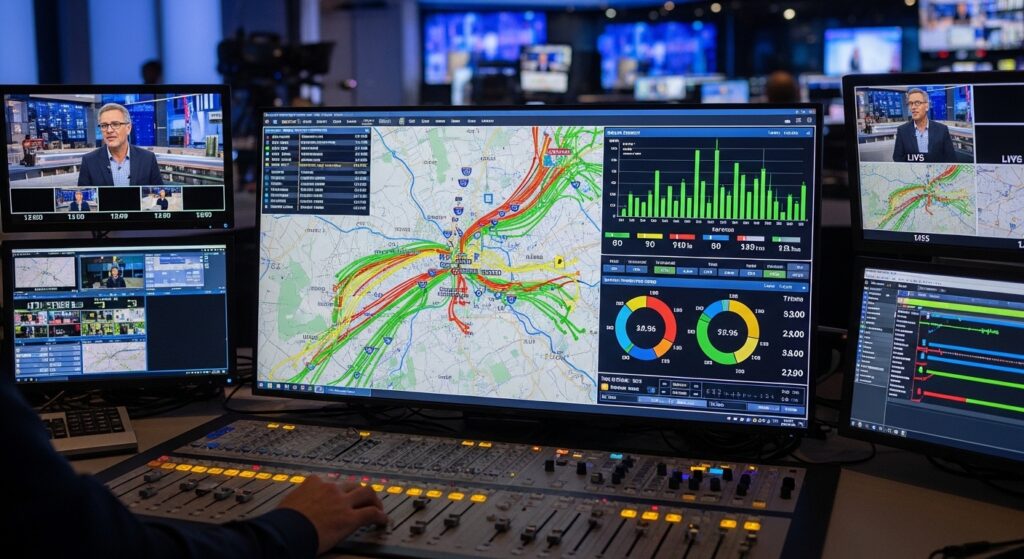
Traffic software often gets misunderstood. Some see it as administrative. Log creation. Ad placement. Reconciliation.
In live TV, it’s much more than that.
In scenarios like live matches, traffic software prepares contingencies in advance—building flexible break structures and additional slots—so when TX makes last minute changes, everything can be accommodated seamlessly without impacting ad commitments.
Without strong Traffic Software, live broadcasts become fragile. Every small change creates confusion. And confusion leads to mistakes on air.
Broadcast Traffic Is About Timing, Not Just Data
Broadcast traffic teams work in minutes and seconds, not just hours.
Even a 30-second delay beyond the booked time is treated as an error. A missed placement impacts revenue, and an incorrect airing sequence can put contractual commitments at risk.
Live TV channels must be able to ingest updated TX logs from broadcast traffic software at any time – without forcing teams to rebuild schedules from scratch. This level of flexibility isn’t a bonus: it’s essential for survival.
Also Read: Why Broadcast Software is Essential for Growing Media Networks
Where Radio Broadcast Software Still Teaches Valuable Lessons
It’s interesting. Radio has been doing live broadcasting longer than most television channels. And in many ways, Radio Broadcast Software still sets a good example.
Radio systems are built for continuity. Live handovers. Quick adjustments. Minimal disruption. There’s no expectation of perfection, only consistency.
Automation Helps, But Only When It’s Thoughtful
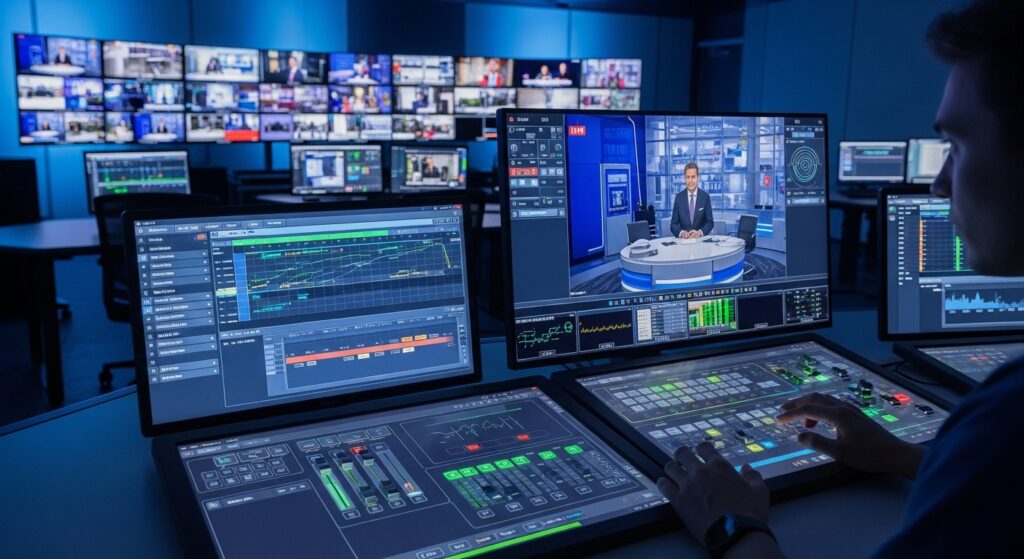
Automation in live broadcasting needs care.
Over-automation can be risky. Too rigid. Too confident. Live TV doesn’t always behave predictably.
But thoughtful automation helps. Auto-updating logs. Conflict alerts. Schedule adjustments that don’t require manual intervention for every small change.
When automation supports people rather than replaces judgment, live TV software becomes far more reliable. The goal isn’t to remove humans from the process. It’s to reduce pressure where possible.
Scalability Matters During Peak Moments
Live events attract spikes. Sports finals. Elections. Breaking news.
Live TV software must scale during these moments without slowing down. Systems that perform well on regular days sometimes struggle under peak conditions.
Strong Broadcast Traffic systems are designed for this. They handle volume without introducing lag. They maintain accuracy when it matters most.
Scalability isn’t just about growth. It’s about resilience.
Also Read: The Future of Broadcast Traffic: Automating Scheduling for Maximum Efficiency
Conclusion
Live TV is still one of the most demanding forms of broadcasting. It demands precision, flexibility and the capacity to respond in real time when plans changes. With the right TV Software like BOSS Studio, everything comes together—built on decades of experience in TV and Radio broadcast operations.
BOSS Studio is where this really happens. BOSS Studio is a fully cloud-based Television Automation & Traffic Management Platform, built for live television environments. Thanks to real-time visibility, flexible scheduling, and powerful traffic workflows at your disposal with BOSS Studio, broadcasters can manage live content in high-pressure situations.
In live television, things are always subject to change. The difference is in how ready you are when they do.
FAQ’s
1. What is the purpose of live TV software?
The purpose of live TV software is to manage real-time scheduling and seamlessly coordinate with traffic operations during live broadcasts. It enables updated logs to be sent to TX at any time, ensuring that last-minute changes are executed smoothly without disrupting the schedule or ad commitments.
2. How does Traffic Software support live broadcasting?
Traffic Software helps manage ad placements, schedule changes, and real-time updates without disrupting on-air flow.
3. How does BOSS Studio support live TV operations?
BOSS Studio offers a real-time broadcast automation and traffic management solution that allows the Broadcast Traffic team to maintain control and send last-minute log revisions to TX without disrupting live broadcasts.